Tamil Nadu: Blessed with Beauty and Culture Tamil Nadu, the eleventh largest Indian state by area, boasts a rich historical legacy shaped by centuries of remarkable dynasties. The people of Tamil Nadu are as passionate about their culture and heritage […]
Tamil Nadu, the eleventh largest Indian state by area, boasts a rich historical legacy shaped by centuries of remarkable dynasties. The people of Tamil Nadu are as passionate about their culture and heritage as they are about their politics and film stars. This southern state offers an extraordinary mix of natural beauty, ancient temples, vibrant arts, and a bustling urban life that will captivate travelers of all kinds.
For leisure travelers, Tamil Nadu tourism promises a diverse and enriching experience. The state’s majestic temples, featuring rock-cut architecture, narrate stories of centuries-old dynasties. Its stunning coastline breathes life into its towns and cities, while its celebrated art and cultural scene are renowned across the world. Once you visit this remarkable state, you’ll be yearning for more.
Tamil Nadu’s geographical diversity offers travelers an array of experiences, from lush forests filled with wildlife to serene beaches and towering mountain ranges. Its rich cultural heritage is reflected in its historic temples, music, dance, and festivals. Let’s explore some of the highlights.
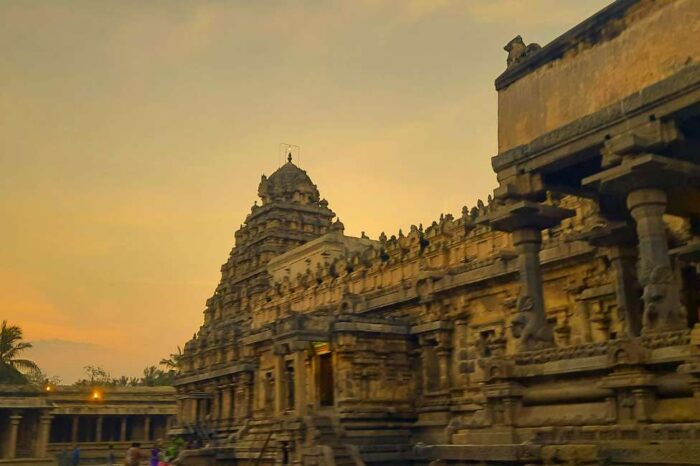
Known as the “Land of Temples,” Tamil Nadu is home to over 30,000 temples dedicated to deities such as Ganesha, Murugan, and Shiva. A few of these temples are recognized as UNESCO World Heritage Sites. Here are some must-visit temples:
Each temple in Tamil Nadu has a deep historical significance, dating back centuries and showcasing awe-inspiring architectural styles.
Tamil Nadu is a wildlife lover’s paradise, with five national parks and 17 wildlife sanctuaries spread across the state. The diverse flora and fauna are a testament to the state’s rich biodiversity. Some key wildlife destinations include:
Tamil Nadu also enjoys international recognition as part of the International Network of Biosphere Reserves, which facilitates global support for conservation.
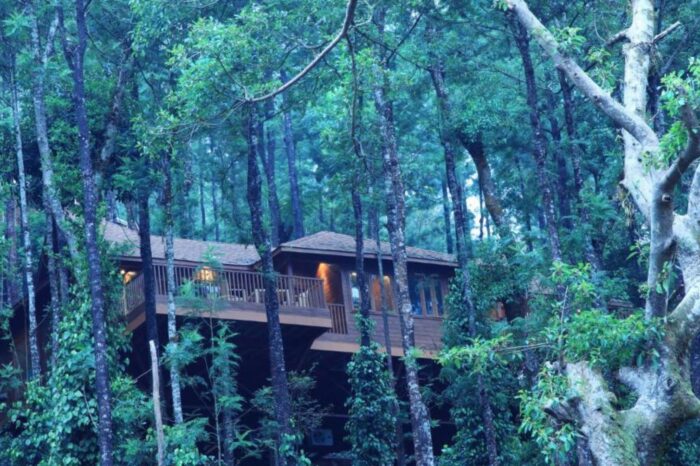
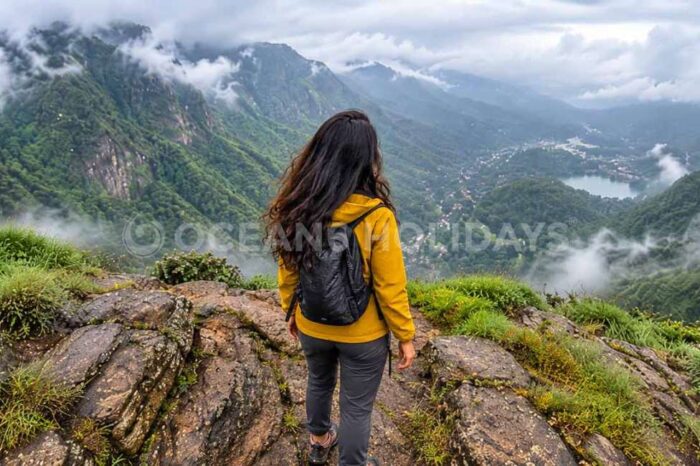
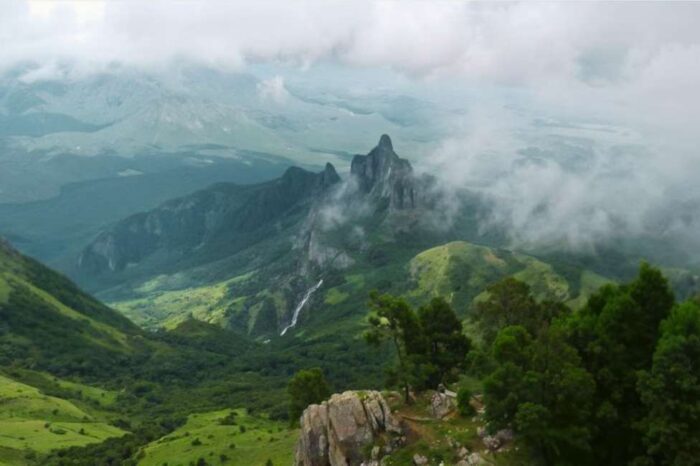
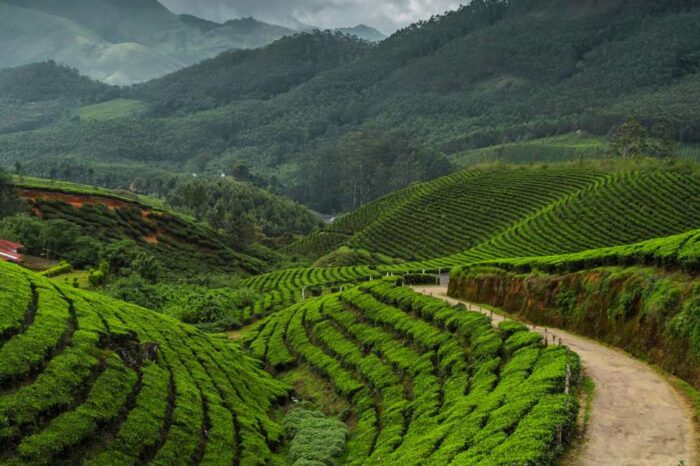
With India’s tropical heat, Tamil Nadu’s hill stations offer cool and refreshing getaways. These serene locales provide an escape into nature’s beauty. Some of the popular and lesser-known hill stations are:
Tamil Nadu is known for its vibrant cultural heritage, including music, dance, literature, and cinema. The state is home to Bharatanatyam, a classical dance form that originated in Tamil Nadu and is celebrated worldwide. The state’s rich musical tradition includes legendary musicians like Ilaiyaraaja and A. R. Rahman.
Visitors can also explore Tamil Nadu’s traditional handicrafts, including Tanjore art paintings and wooden decor pieces.
Tamil Nadu’s festivals are a vibrant reflection of its culture and spirituality. While Pongal, the harvest festival, is the most popular, other noteworthy celebrations include:
Tamil Nadu shares its borders with the union territory of Puducherry and the states of Kerala, Karnataka, and Andhra Pradesh. The state’s southernmost location makes Kanyakumari, where the Arabian Sea, Bay of Bengal, and Indian Ocean meet, a unique destination.
With a coastline stretching 940 km, Tamil Nadu boasts several scenic beaches like Marina Beach, Mahabalipuram, and Poompuhar. The state played a crucial role in ancient trade routes and was a prominent player in the spice trade with the Roman and Greek empires.
The best time to visit Tamil Nadu is during the winter months from November to March, when the weather is pleasant. Summers, from April to June, can be sweltering with temperatures reaching 40°C, especially in coastal areas. The monsoon season occurs from June to September and October to December, bringing some relief from the heat but may cause waterlogging in some areas.
Tamil Nadu’s recorded history stretches back over 2,000 years to the Sangam Age (300 BCE – 300 CE), when three great Tamil kingdoms — the Cheras, Cholas, and Pandyas — ruled a prosperous and literate civilization with active trade links to Rome and Southeast Asia. The Pallava dynasty (4th–9th century) gave birth to Dravidian temple architecture at Mahabalipuram and Kanchipuram. The imperial Cholas (9th–13th century) built the most powerful maritime empire in Asian history, extending their influence to Southeast Asia, Sri Lanka, and the Maldives. The Nayak rulers of Madurai and Thanjavur carried the tradition forward, building some of the grandest temple complexes the world has ever seen. After a period of European colonial contests between the Portuguese, Dutch, French, and British, Tamil Nadu became part of the Madras Presidency. Post-independence, the state has been a leader in classical arts, education, cinema, and technology. Today it is one of India’s most industrialized and educated states — while still holding its ancient soul intact.
With its unparalleled temple heritage, world-class wildlife, vibrant culture, and stunning coastline, Tamil Nadu offers every traveller a unique blend of the ancient and the alive. Whether you’re meditating at a 1,000-year-old shrine, sipping filter coffee in a hill-station café, or watching an elephant emerge from forest mist at sunrise — Tamil Nadu will leave a mark on you that no other destination can.
If you want to experience the soul of India’s oldest civilization, Tamil Nadu is where you go. Not the India of crowded tourist trails, but the India that built empires in stone, wrote poetry in the world’s oldest living language, and danced its prayers into immortality. This is a state of extraordinary contrasts — towering temple gopurams rising from small towns, pristine beaches stretching beside ancient pilgrimage routes, misty mountains flanking scorching plains. Tamil Nadu rewards the curious traveller at every turn. The size and diversity of the state can initially feel overwhelming, so planning your journey thoughtfully — by geography or theme — is the best approach. Here is a guide to the major destinations that define this magnificent state.
Chennai is Tamil Nadu’s capital and its beating heart — a city of 10 million people that somehow balances being a global IT hub, a classical arts capital, and a beach city all at once. Marina Beach, stretching over 13 km, is the second longest urban beach in the world and a daily social institution for Chennaites. The city’s Kapaleeshwarar Temple in Mylapore is an exquisite example of Dravidian architecture surrounded by a bustling traditional neighbourhood. Fort St. George — India’s first British fort, built in 1644 — now houses the Tamil Nadu state legislature and a fascinating museum of colonial artefacts. The Egmore Museum’s bronze gallery is arguably the finest collection of Chola bronzes in existence. Chennai is also the gateway to the Chennai Music Season — the world’s biggest classical music festival running December through January.
Madurai is Tamil Nadu’s temple city — over 2,500 years old and still going strong. Think of it as the Varanasi of the south, but drier, hotter, and with a gopuram that can be seen from almost anywhere in the city. The Meenakshi Amman Temple is the centrepiece — a 6-hectare complex of 14 painted towers, 1,000-pillared halls, and a golden lotus tank that has been an active place of worship for over 2,000 years. The Thirumalai Nayak Palace is a magnificent 17th-century Indo-Saracenic structure built by the Nayak king who arguably gave Madurai its modern grandeur. Madurai is also famous for its jasmine — the local Madurai malli is considered India’s finest — and for a food culture anchored around kothu parotta, jigarthanda (a local milkshake), and the famous Madurai kari dosa.
Just 60 km south of Chennai on the Coromandel Coast lies Mahabalipuram — an open-air museum of 7th–8th century Pallava rock-cut art. This UNESCO World Heritage Site contains the Shore Temple (one of India’s oldest stone temples), the Pancha Rathas (five monolithic stone chariots carved from single boulders), and the magnificent Arjuna’s Penance — the largest open-air rock relief in the world, depicting scenes from the Mahabharata on a 30-metre granite face. The town itself is a charming coastal village full of stone-carving workshops — you can watch artisans today using the same chisels and techniques as their Pallava predecessors. Perfect for a day trip from Chennai or an overnight beach stay.
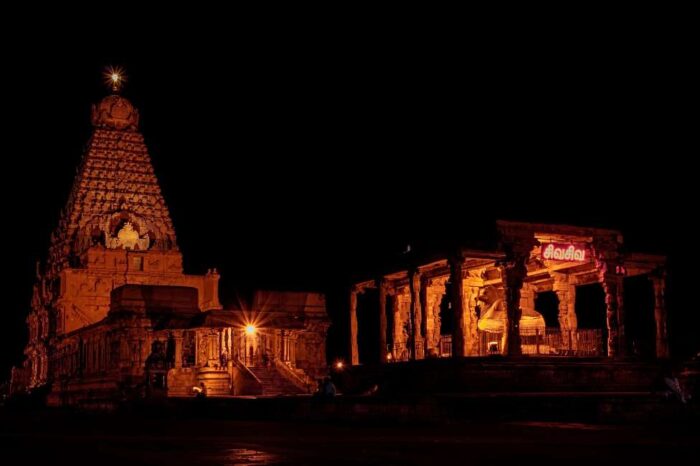
Thanjavur is the cultural capital of Tamil Nadu — the seat of the great Chola empire and a city synonymous with bronze sculptures, Tanjore paintings, and classical music. The Brihadeeswarar Temple (also called the Big Temple) is the crown jewel: a UNESCO World Heritage Site and one of the greatest architectural feats in human history. Built entirely from granite — with a vimana (tower) of 66 metres — it was completed in 1010 CE with no mortar, just interlocking stone. The Thanjavur Royal Palace complex houses the Saraswati Mahal Library, one of Asia’s oldest libraries, with over 30,000 rare manuscripts in Sanskrit and Tamil. Tanjore Veena, Tanjore paintings (with real gold leaf and semi-precious stones), and the famous Thanjavur dancing dolls are crafts you can watch being made live and buy directly from artisans.
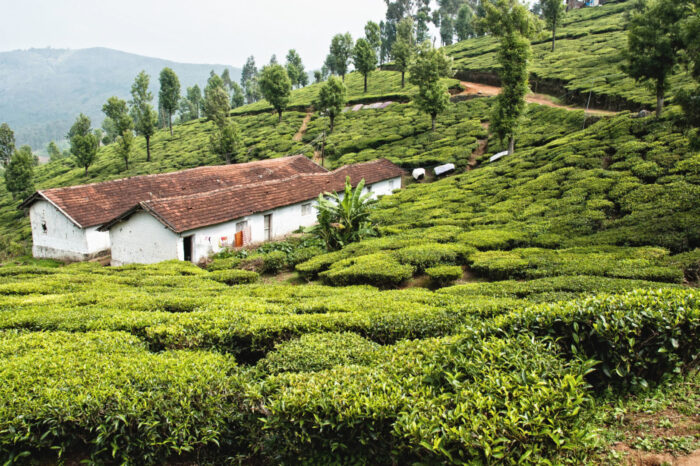
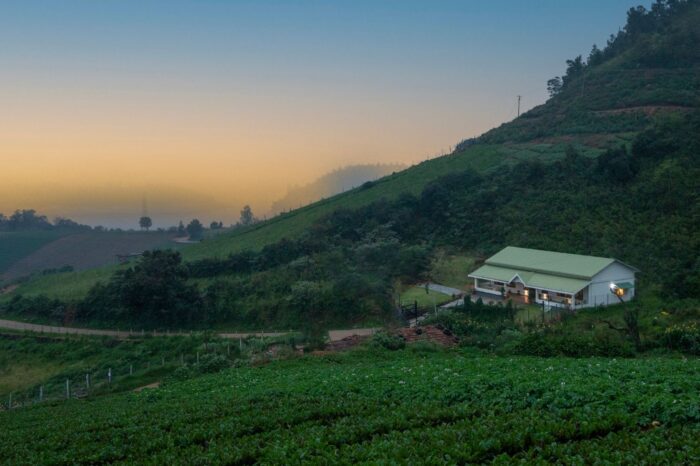
Ooty is Tamil Nadu’s Queen of Hill Stations — a colonial-era retreat at 2,240 metres in the Nilgiri Hills, wrapped in eucalyptus forests, tea estates, and cool mist. The journey up from Mettupalayam on the Nilgiri Mountain Railway — a UNESCO World Heritage toy train — is one of India’s most scenic rail rides, crossing 16 tunnels and 250 bridges through verdant forest. The Botanical Gardens in Ooty, spread over 22 hectares, are a legacy of the British raj and host the Annual Flower Show every May. Doddabetta Peak, the highest point in the Nilgiris at 2,637 metres, offers panoramic views of the valley when the clouds part. Tea plantations around Ooty and nearby Coonoor produce some of India’s finest Nilgiri tea — golden, fragrant, and best had from a roadside stall in a glass tumbler.
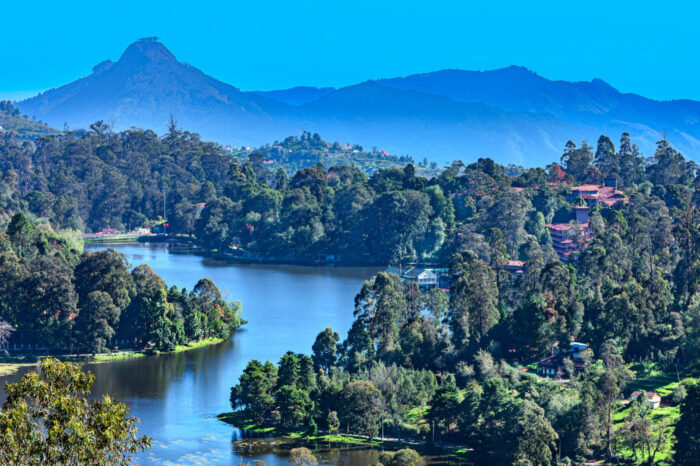
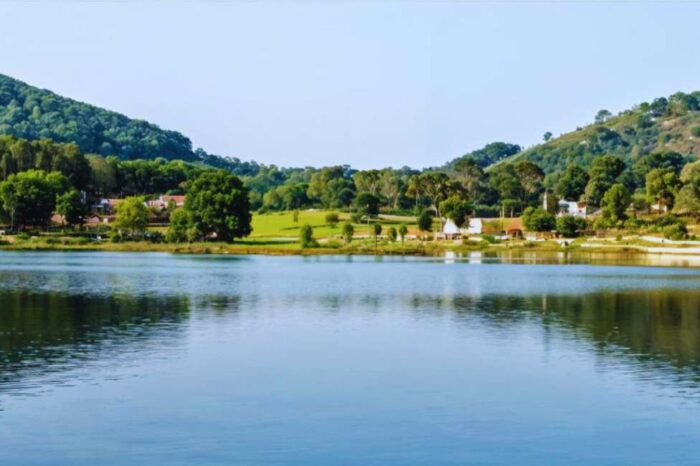
Kodaikanal sits at 2,133 metres in the Palani Hills — quieter than Ooty, with a fairy-tale quality that rewards those who make the extra effort to reach it. The star-shaped Kodaikanal Lake at its centre is ringed by forest and best enjoyed by bicycle or pedal boat. Pillar Rocks — three colossal granite pillars rising 122 metres from the earth — are one of the most dramatic natural landmarks in Tamil Nadu. Coaker’s Walk is a kilometre-long cliff-top path with views that on a clear day extend all the way to the plains below. The Berijam Lake within the Kodaikanal Wildlife Sanctuary is a pristine reserve requiring a forest department permit — worth every effort for the silence and scenery. Kodaikanal is also home to the Kurinji flower, which blooms once every 12 years and turns the hillsides a rolling violet-blue.
Rameswaram is one of India’s four sacred Dhams — a pilgrimage site of the highest order, located on Pamban Island connected to the mainland by the magnificent Pamban Bridge. The Ramanathaswamy Temple here has the longest corridor of any Hindu temple in the world — 1,212 metres of ornately carved pillars that create a hypnotic visual effect as you walk through. This is the land where, according to the Ramayana, Lord Rama built his bridge to Lanka. The waters around Rameswaram are among the clearest in India, and Dhanushkodi — the ghost town at the island’s tip where the Bay of Bengal meets the Indian Ocean — is one of the most hauntingly beautiful and remote spots in all of South India.
Kanyakumari sits at the very tip of the Indian subcontinent — the meeting point of three seas. It is the southernmost point of mainland India, and the experience of watching the sunrise and sunset from the same spot over open ocean is unlike anything else in the country. The Vivekananda Rock Memorial sits on a tiny island just off the shore — accessible by ferry — where Swami Vivekananda meditated in 1892 before travelling to Chicago to address the Parliament of World Religions. The Thiruvalluvar Statue — a 133-foot stone figure of the great Tamil poet — stands on an adjacent rock, a reminder that Tamil Nadu’s cultural heroes are revered as deeply as its gods. Kanyakumari is best experienced at dawn and dusk — pack patience, a camera, and a warm jacket.
Though technically a Union Territory, Pondicherry is an essential stop on any Tamil Nadu itinerary. The French Quarter — with its mustard-yellow colonial buildings, bougainvillea-draped courtyards, and wide promenade boulevard — feels like a piece of the Mediterranean transplanted to the Coromandel Coast. Sri Aurobindo Ashram, founded in 1926, is one of India’s most respected spiritual communities and draws seekers from around the world. Auroville — the experimental international township just outside the city — is a unique social experiment in human unity, home to 3,000 residents from 50+ nationalities around a golden geodesic Matrimandir. The food in Pondicherry is a delight: French-Tamil fusion cafés, freshly baked croissants alongside masala dosas, and some of the best craft beer in South India.
For wildlife enthusiasts, Tamil Nadu’s northwestern corner is a treasure. Mudumalai Tiger Reserve — part of the larger Nilgiri Biosphere Reserve — is one of India’s oldest and most biodiverse protected areas, home to Bengal tigers, Asian elephants, Indian leopards, gaur, dholes, and over 200 bird species. The reserve connects seamlessly with Wayanad (Kerala) and Nagarhole (Karnataka), creating one of the largest contiguous wildlife corridors in Asia. Anamalai Tiger Reserve (Pollachi) and Kalakkad-Mundanthurai Tiger Reserve in the southern Agasthyamalai hills are equally spectacular and far less visited — ideal for travellers who want authentic wilderness without the crowds. Elephant camps along the Mudumalai fringes offer ethical interaction with domesticated elephants under mahout supervision.
98742 84569
98743 61951
Mon-Sat 11.00AM-07.30PM