Madhya Pradesh
Mystical, Majestic, Mesmerizing – Madhya Pradesh.
Step into India’s beating heart – a state so vast, so layered, and so alive that it rewrites your idea of what a destination can be. Madhya Pradesh is where ancient temples pierce the sky, where tigers stalk through dense sal forests, where stone carvings from a thousand years ago still blush with detail. A land where the Narmada flows eternal, where medieval fortresses echo with the clash of kingdoms, and where tribal artistry thrives alongside UNESCO World Heritage Sites. Madhya Pradesh is not a place you visit – it is a place that stays with you.
Capital: Bhopal
Official Language: Hindi
Dial Code: 0755
Population: 72,626,809 (as of 2011)
Currency: Indian Rupee (INR)
Time Zone: UTC+05:30 (IST)
Area: 308,252 square km
Madhya Pradesh is a living museum. The state is home to some of India’s most significant archaeological and historical treasures. The Sanchi Stupa, commissioned by Emperor Ashoka in the 3rd century BC, is one of the oldest stone structures in India and a UNESCO World Heritage Site. The rock shelters of Bhimbetka, another UNESCO site, contain prehistoric cave paintings dating back over 30,000 years – making them among the oldest evidence of human life on the subcontinent. The Gwalior Fort, described by a Mughal emperor as “the pearl amongst fortresses of Hind,” stands as one of India’s most impenetrable citadels. Museums like the Central Museum in Indore and the Tribal Museum in Bhopal bring centuries of Madhya Pradesh’s layered history to vivid life.
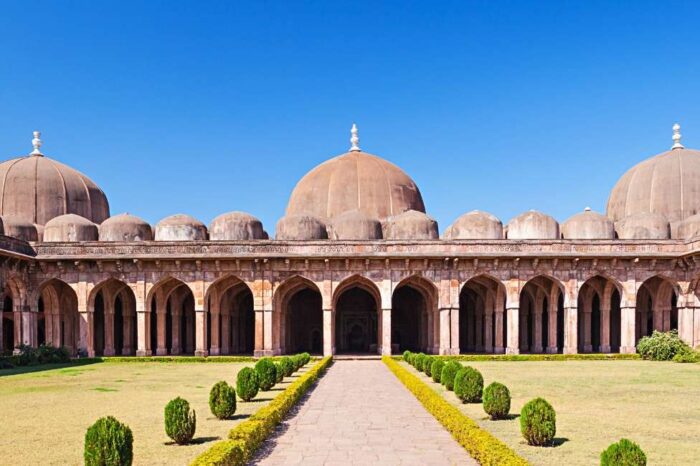
Few states in India can rival Madhya Pradesh for the sheer density and diversity of its architectural heritage. The Khajuraho Group of Monuments – a UNESCO World Heritage Site – comprises intricately carved temples built between 950–1050 AD by the Chandela dynasty. These temples are a masterclass in medieval Indian craftsmanship, their exteriors adorned with celestial sculptures that narrate stories of human life and divine aspiration. The Orchha Fort Complex, a stunning ensemble of palaces, chhatris, and temples rising from the Betwa River, is a monument to Bundela Rajput grandeur. Mandu, a hilltop fortress city, showcases a seamless blend of Afghan and Hindu architecture, with its Jahaz Mahal (Ship Palace) floating like a vessel between two lakes.
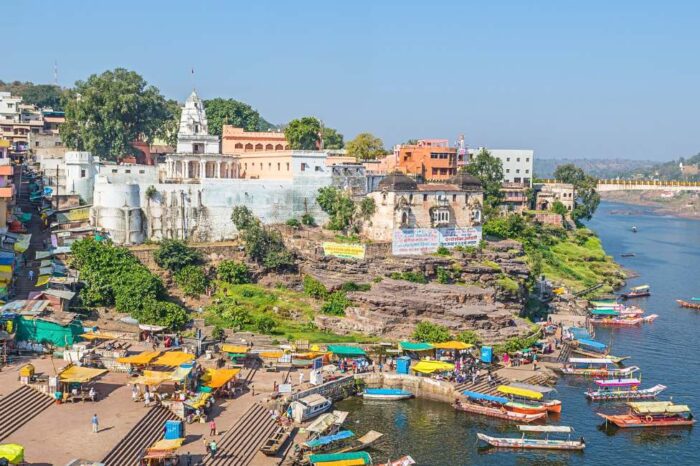
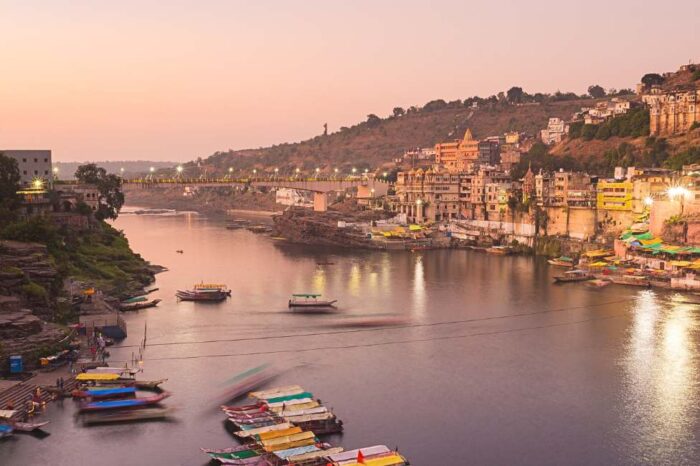
Madhya Pradesh is one of India’s most sacred landscapes. The Mahakaleshwar Jyotirlinga in Ujjain is one of the twelve most sacred Shiva shrines in the country and draws millions of pilgrims every year. Ujjain itself hosts the Kumbh Mela every twelve years – the largest religious gathering on earth. The Omkareshwar Jyotirlinga, set on an island in the Narmada shaped like the sacred Om symbol, is a sight of breathtaking spiritual beauty. Amarkantak, the source of the Narmada River, is revered as one of India’s most sacred pilgrim centres. For the Buddhist traveller, Sanchi and Satna offer deeply moving spiritual journeys.
Madhya Pradesh is the cradle of several classical Indian art forms. Hindustani classical music finds deep roots here, with legends like Tansen and Ustad Allauddin Khan hailing from this land. The Gond and Baiga tribes have given India the globally celebrated Gond art – vivid, intricate, and deeply symbolic. The Chanderi and Maheshwari handloom fabrics are prized across India for their fineness and elegance. Folk dances like Karma, Saila, and Matki reflect the vibrant tribal and rural soul of the state. The cuisine – bhutte ka kees, dal bafla, poha-jalebi, and the smoky Indore street food – is a flavour universe of its own.
Madhya Pradesh celebrates with full-hearted grandeur. The Khajuraho Dance Festival, held every February against the backdrop of illuminated temples, is one of India’s most prestigious classical dance events, drawing performers of Bharatanatyam, Kathak, Odissi, and Kuchipudi from across the country. The Tansen Music Festival in Gwalior is a pilgrimage for Hindustani classical music lovers. Ujjain’s Simhastha Kumbh Mela is the spiritual event of a lifetime. The Lokrang Festival in Bhopal showcases the folk and tribal arts of the state in a spectacular display of colour and talent.
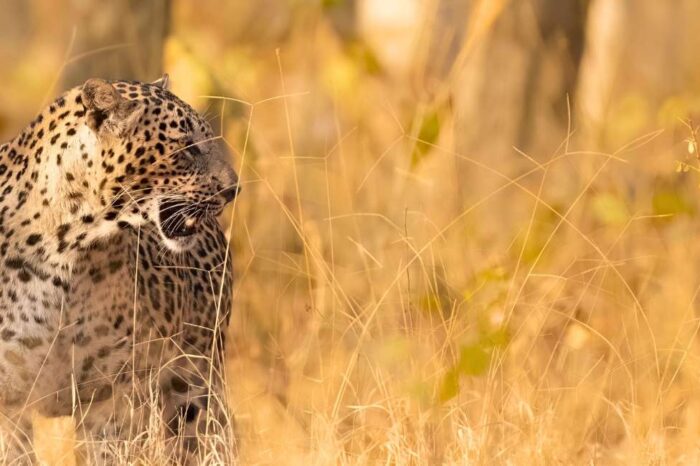
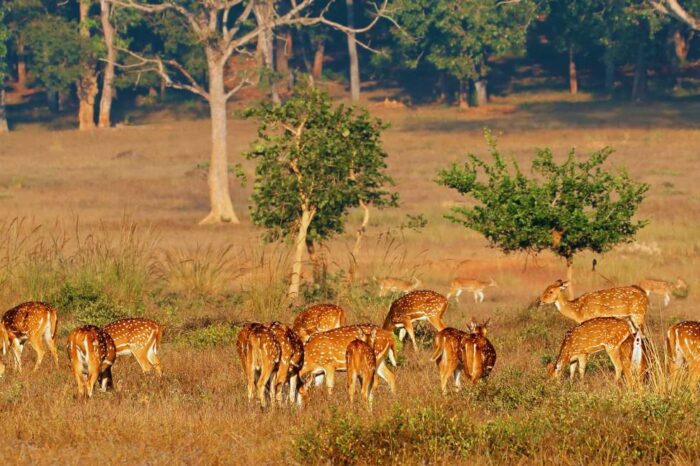
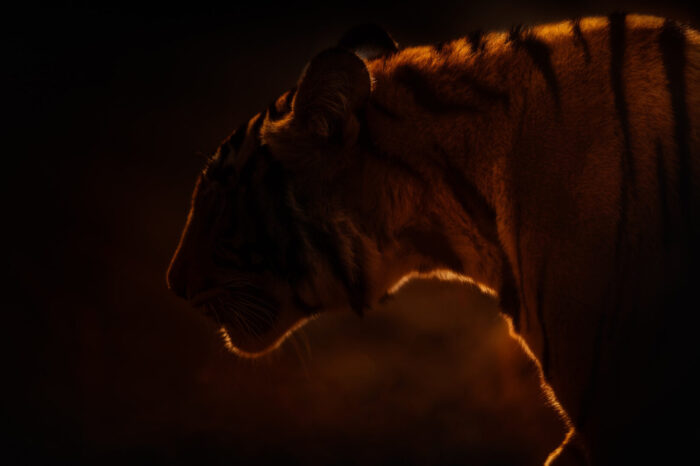
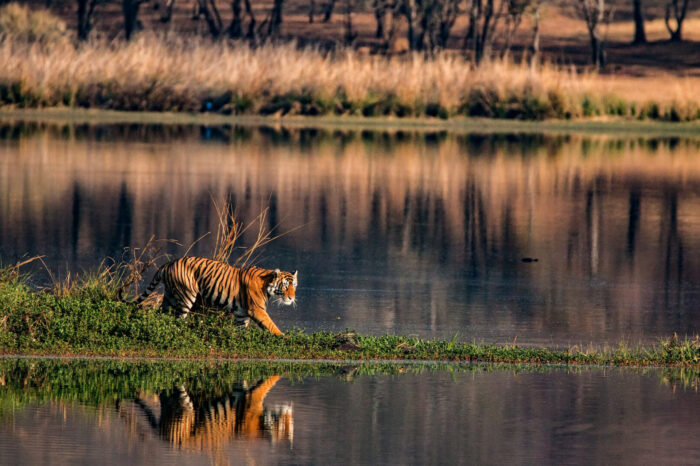
Madhya Pradesh is the undisputed wildlife capital of India. The state has more national parks and tiger reserves than any other in the country. Kanha National Park is the inspiration behind Rudyard Kipling’s The Jungle Book – and walking its trails, you half expect Mowgli to step out from the sal trees. Bandhavgarh has the highest density of Bengal tigers in the world. Pench, Satpura, and Panna complete a roll call of extraordinary wildlife destinations. Beyond tigers, the state shelters leopards, sloth bears, wild dogs, barasingha (the rare hard-ground swamp deer), and over 500 species of birds. The Pachmarhi Biosphere Reserve – the only hill station in MP – adds waterfalls, forests, and prehistoric rock art to the mix.
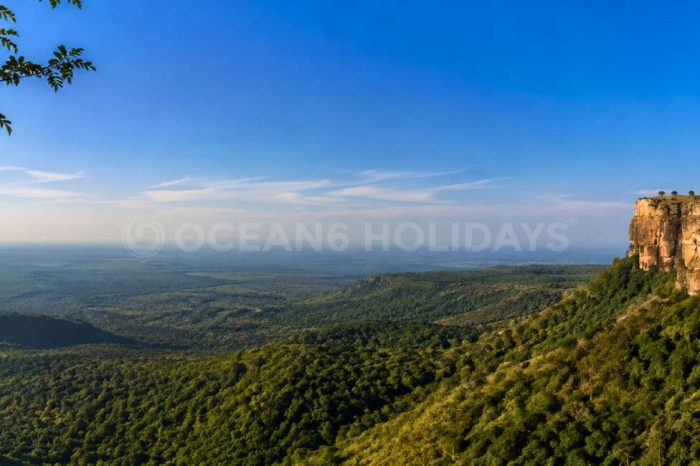
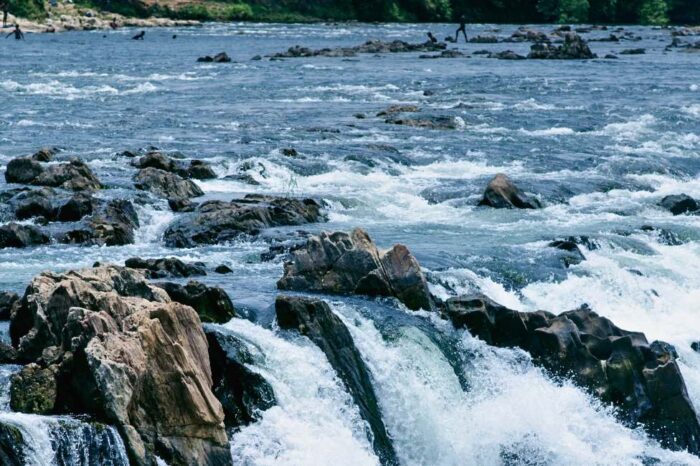
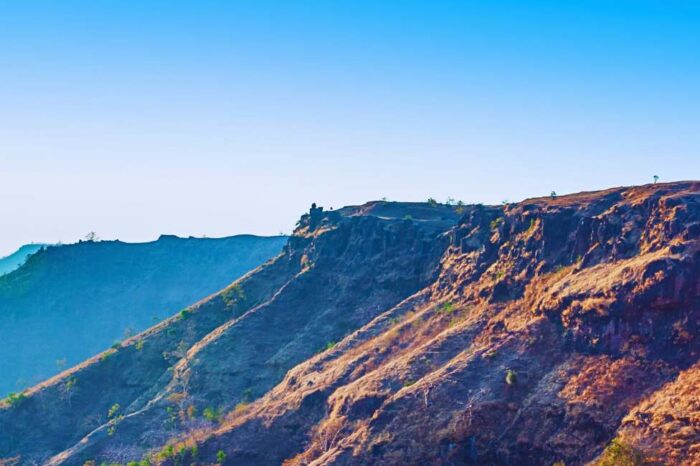
Madhya Pradesh sits at the geographical centre of India – earning its name, which literally translates to “Central Province.” It shares borders with five states: Uttar Pradesh to the north, Chhattisgarh to the east, Maharashtra to the south, Rajasthan to the northwest, and Gujarat to the west. The Vindhya and Satpura mountain ranges run through the state, and the sacred Narmada River flows westward across its heartland. This central position has made Madhya Pradesh the crossroads of Indian civilisations, cultures, and trade routes for millennia.
Madhya Pradesh has three distinct seasons. Summers (April–June) can be scorching, with temperatures touching 45°C in the plains – not ideal for travel. The monsoon (July–September) transforms the forests into a lush green canvas, though wildlife safaris are limited during this period. The best time to visit is October to March, when the weather is cool and pleasant, wildlife is most active, and all the major festivals take place. For tiger spotting, February and March – just before park closures – offer the highest sighting rates as water sources dry up and animals congregate.
By Road: Madhya Pradesh has an extensive road network connecting all major cities and tourist destinations. National highways link Bhopal, Indore, Gwalior, Jabalpur, and Ujjain. State-run buses and private taxis cover even remote routes like Pachmarhi and Orchha efficiently.
By Rail: The state is well-connected by Indian Railways. Bhopal, Indore, Gwalior, and Jabalpur are major railway junctions with direct trains to Delhi, Mumbai, Chennai, Kolkata, and Hyderabad. The Shatabdi Express (Delhi–Bhopal) and August Kranti Rajdhani are popular options for fast intercity travel.
By Flight: Madhya Pradesh has four operational airports – Bhopal (Raja Bhoj Airport), Indore (Devi Ahilyabai Holkar Airport), Gwalior, and Jabalpur. Indore is the busiest hub with regular flights to Delhi, Mumbai, Bangalore, and Hyderabad. For remote wildlife destinations like Kanha or Bandhavgarh, the nearest airports are Jabalpur and Nagpur (Maharashtra), followed by a scenic road drive.
The history of Madhya Pradesh stretches back to the very cradle of human civilisation. The Bhimbetka rock shelters confirm human habitation from the early Stone Age. The region saw the rise of the Mauryan Empire under Ashoka, whose edicts and the great Sanchi Stupa remain as enduring legacies. The Gupta period brought a golden age of art, literature, and science to the region. The Chandela dynasty built the magnificent Khajuraho temples, while the Paramara kings patronised Sanskrit scholarship at Dhara. The Mughals left their imprint through Mandu and Orchha, and the Scindias and Holkars shaped the modern cities of Gwalior and Indore. After independence in 1947, Madhya Pradesh was formed in 1950 from the former Central Provinces, Berar, and several princely states, and its current boundaries were established in 1956. The state is the second largest in India by area and carries its layered history in every stone, temple, and forest trail.
Bhopal, the capital of Madhya Pradesh, is a city of beautiful contradictions – old and new, serene and bustling, deeply historical yet vibrant with modern energy. Set around two large natural lakes – the Upper Lake (Bada Talab) and the Lower Lake (Chota Talab) – Bhopal is one of the greenest capital cities in India. The city is dotted with mosques, palaces, and museums. The State Museum and the Tribal Museum are among the finest in central India. The Bharat Bhavan, a multi-arts complex on the lakefront, is a premier cultural space for visual and performing arts. Bhopal is also the gateway to Sanchi and Bhimbetka – two UNESCO World Heritage Sites within a two-hour drive.
Indore is Madhya Pradesh’s largest city and its commercial powerhouse. Known as the “Mini Mumbai” of central India, Indore is a city that never sleeps – and nowhere is that more evident than in its legendary street food culture. Sarafa Bazaar, a jewellery market by day, transforms into one of India’s most celebrated night food markets after dark. Chappan Dukan (56 shops) is another street food paradise. The Rajwada Palace, a seven-storey historical marvel, and the Lal Baag Palace, inspired by Buckingham Palace, offer glimpses of the Holkar dynasty’s opulence. Indore has been named India’s Cleanest City for seven consecutive years – a title it wears proudly.
Khajuraho is unlike any place on earth. The Khajuraho Group of Monuments – a UNESCO World Heritage Site – is a collection of 25 surviving temples (originally 85) built between 950 and 1050 AD by the Chandela Rajput dynasty. The temples are celebrated worldwide for their exquisite erotic sculptures, but that is only one dimension of their genius. The carvings depict the full spectrum of human life – warriors, musicians, celestial beings, animals, and everyday scenes – executed with a technical mastery that modern sculptors can only marvel at. The Kandariya Mahadeva Temple, the largest of the group, soars 31 metres skyward. Every February, the Khajuraho Dance Festival brings the temples alive with classical performances under the stars.
Gwalior is dominated – literally – by one of India’s mightiest forts. The Gwalior Fort rises 100 metres above the city on a sandstone plateau and has never been successfully stormed in its recorded history. Its walls contain palaces, temples, and the tomb of Tansen, India’s greatest classical musician. The Jai Vilas Palace, built in 1874, is a staggering display of European grandeur adapted to Indian royalty – its Darbar Hall houses two of the world’s largest chandeliers, each weighing 3.5 tonnes. Gwalior is also the home of the Scindia dynasty and hosts one of India’s finest horse racing circuits. The Tansen Music Festival, held in the fort’s shadow every November, draws Hindustani classical music maestros and their devoted audiences.
Ujjain is one of the seven sacred cities of Hinduism and one of the four sites of the Kumbh Mela, the world’s largest human gathering. The Mahakaleshwar Jyotirlinga – one of twelve and the only one facing south (dakshina-mukhi) – is the spiritual anchor of this ancient city. Ujjain’s spiritual calendar never stops: the Bhasma Aarti at Mahakaleshwar at dawn, the Kumbh Mela every twelve years, and the daily rituals at the Harsiddhi and Kal Bhairav temples create an unbroken rhythm of devotion. The Vedha Shala astronomical observatory, built in the 18th century, marks Ujjain as the traditional prime meridian of Indian astronomical calculation. Walking Ujjain’s ghats at sunrise, with the Shipra River reflecting the temple spires, is one of the most moving experiences India has to offer.
Kanha National Park is the jewel of Indian wildlife – and the real-world landscape that inspired Rudyard Kipling’s The Jungle Book. Spread across 940 square kilometres in the Maikal range of the Satpura Hills, Kanha is home to Bengal tigers, leopards, wild dogs (dholes), sloth bears, and the rare barasingha (hard-ground swamp deer), which was saved from extinction here. Jeep safaris at dawn and dusk offer a raw, unfiltered encounter with the wild. The park is divided into four zones – Kanha, Kisli, Mukki, and Sarhi – and operates between October and June. Staying at a forest lodge on the park’s periphery, falling asleep to the sound of a distant tiger call, is an experience that rewrites your relationship with the natural world.
Bandhavgarh has the highest density of Bengal tigers of any national park in the world. The park, covering 448 square kilometres, sits on a hilly, forested terrain dotted with ancient caves and ruins – including the Bandhavgarh Fort, believed to be over 2,000 years old and now accessible by elephant. Tiger sightings here are not a matter of luck so much as patience – on any given morning safari, the odds are firmly in your favour. Beyond tigers, the park holds leopards, hyenas, over 250 species of birds, and a remarkable diversity of deer. Bandhavgarh is compact enough to feel intimate and wild enough to feel genuinely thrilling.
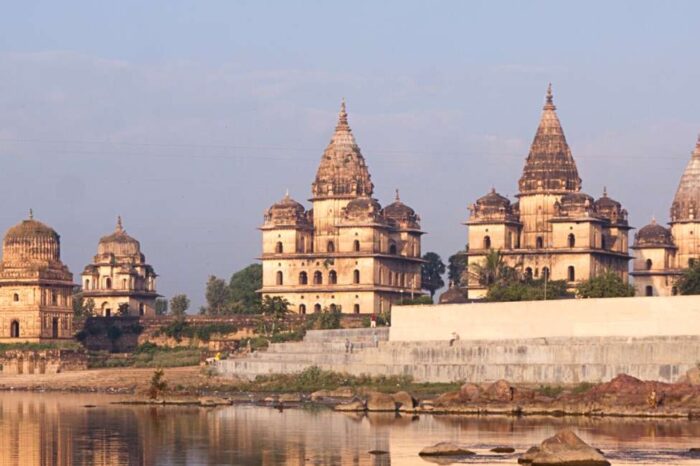
Orchha is one of India’s best-kept secrets. This small town on the banks of the Betwa River in Bundelkhand was the capital of the Bundela Rajput kingdom in the 16th and 17th centuries – and it looks exactly as it did then. The Orchha Fort Complex contains three extraordinary palaces – the Jahangir Mahal, the Raj Mahal, and the Rai Praveen Mahal – each a masterpiece of Bundela architecture. The cenotaphs (chhatris) of Orchha’s rulers, lined along the Betwa River, are among the most elegant funerary monuments in India. Orchha is also the site of the Ram Raja Temple – the only temple in India where Ram is worshipped as a king and given a full military salute every day. Orchha moves at a different pace – slow, contemplative, magnificent.
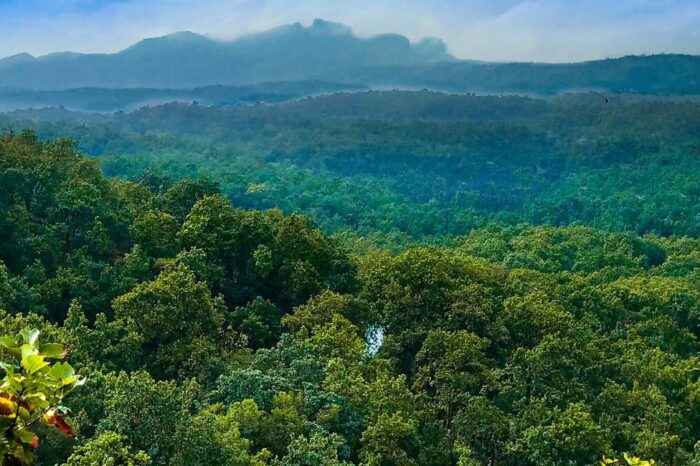
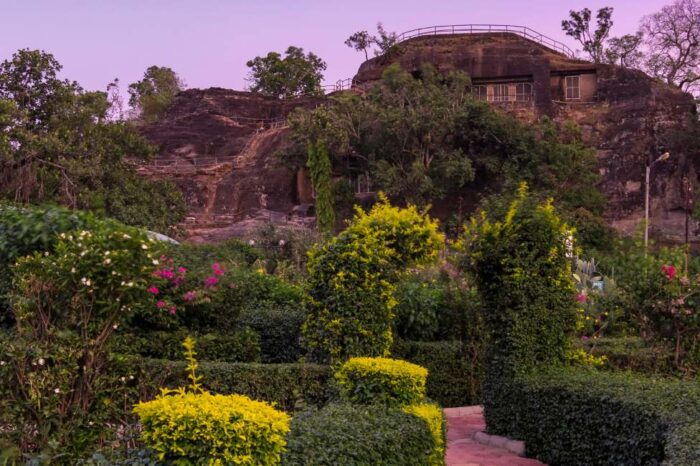
Pachmarhi is Madhya Pradesh’s only hill station and its most serene escape. Set at 1,067 metres in the Satpura Range, Pachmarhi is a UNESCO Biosphere Reserve blanketed in dense forests, laced with waterfalls, and etched with prehistoric rock art. The Bee Falls, Duchess Falls, and Apsara Vihar are among the most beautiful waterfalls in central India. The Mahadeo and Chauragarh temples draw pilgrims on a steep, dramatic trek. Jata Shankar Caves and the Pandava Caves add layers of mythology and history to the landscape. For trekkers, bird watchers, and those simply seeking quiet in the trees, Pachmarhi is a revelation.
Mandu, perched 2,000 feet above sea level on a plateau in the Vindhya Hills, is a ghost city of extraordinary beauty. Once the capital of the Malwa Sultanate, Mandu is a sprawling fortress city covering 20 square kilometres, filled with palaces, mosques, baolis (stepwells), and pavilions. The Jahaz Mahal (Ship Palace), designed to look like a ship afloat between two water bodies, is the architectural showpiece of Mandu. The legend of Baz Bahadur and Rani Roopmati – a sultan and a singer whose doomed love story is immortalised in folk songs – gives Mandu its romantic soul. During the monsoon, when the plateau turns emerald green and clouds drift through the ruins, Mandu becomes one of the most atmospheric places in all of India.
98742 84569
98743 61951
Mon-Sat 11.00AM-07.30PM