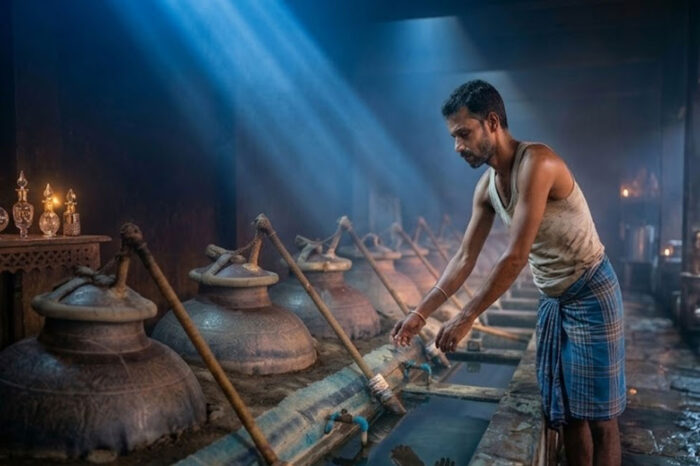
Visit to Perfume Capital of India, Local Distilleries, Creating Your Own Signature Perfume
Triveni Sangam, Bada Hanuman Mandir, Ram Janam Bhoomi, Janki Kund, Akshayvat Tree
Uttar Pradesh
Sacred, Spiritual, Sublime – Uttar Pradesh.
A land where the Ganga flows like a lifeline of civilisation, carrying the prayers and ashes of a billion souls across centuries. Uttar Pradesh is not just a state – it is the heartbeat of India. Here, every ghat whispers Vedic hymns, every alley in Varanasi smells of marigold and incense, and every monument in Agra stands as testimony to a love that defied time. From the ivory brilliance of the Taj Mahal to the golden shimmer of Varanasi’s ghats at dawn – from the birthplace of Lord Rama in Ayodhya to the cradle of Lord Krishna in Mathura – Uttar Pradesh is where mythology breathes, history walks, and spirituality is a way of life. This is India’s most populous state, its most ancient, and arguably its most soulful.
Capital: Lucknow
Official Language: Hindi
Dial Code: 0522 (Lucknow)
Population: 199,812,341 (as of 2011)
Currency: Indian Rupee (INR)
Time Zone: UTC+05:30 (IST)
Area: 240,928 square km
To truly understand Uttar Pradesh, you must first walk through its museums and archaeological wonders. The State Museum in Lucknow is a treasure trove of Gandharan sculptures, terracotta figurines, and Mughal artefacts. The Archaeological Museum in Mathura houses one of the finest collections of Buddhist and Jain sculptures in the country, including the iconic headless Kanishka statue. The Sarnath Museum, sitting beside the very deer park where the Buddha gave his first sermon, is home to the Lion Capital of Ashoka – now India’s national emblem. Each museum is less a building and more a time capsule, letting you reach across centuries and touch the civilisations that built the world’s greatest religions and empires right here on this soil.
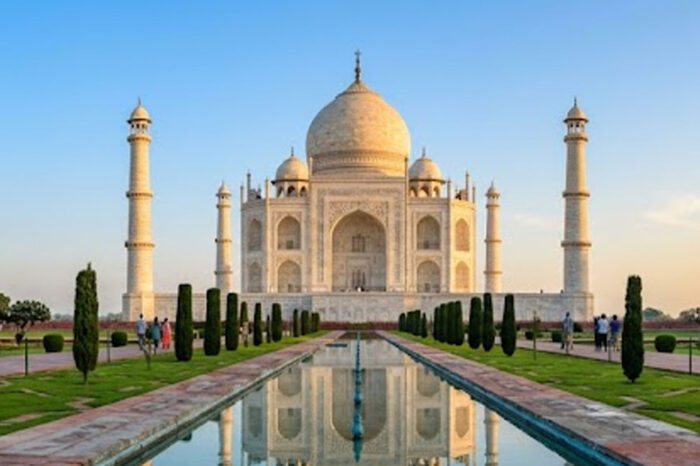
Uttar Pradesh is the architectural crown of India. The Taj Mahal in Agra – a UNESCO World Heritage Site and one of the Seven Wonders of the World – is a white marble symphony built by Mughal Emperor Shah Jahan as an eternal tribute to his queen Mumtaz Mahal. Agra Fort, another UNESCO site, is a massive red sandstone fortress that served as the main residence of the Mughal emperors. Fatehpur Sikri, Akbar’s abandoned ghost city, stands frozen in time – its sandstone corridors, Buland Darwaza, and Panch Mahal speaking of imperial ambition and architectural genius. In Lucknow, the Bara Imambara and its legendary Bhul Bhulaiya (labyrinthine maze) are architectural marvels of Nawabi craftsmanship. Orchha’s cenotaphs, temples, and palaces rise dramatically from the banks of the Betwa River, completing the picture of a state where stone itself tells stories.
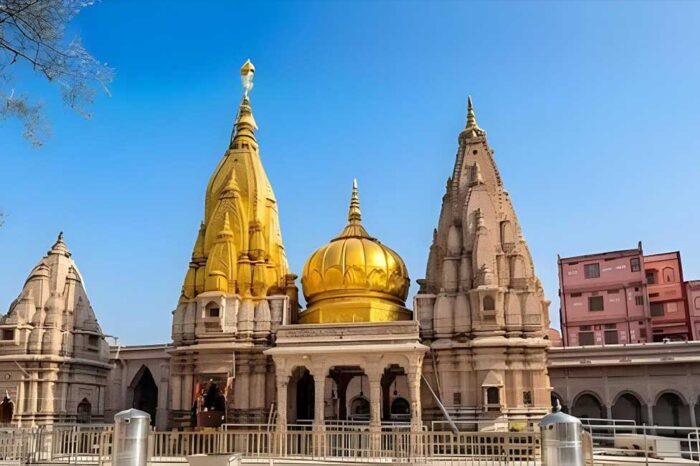
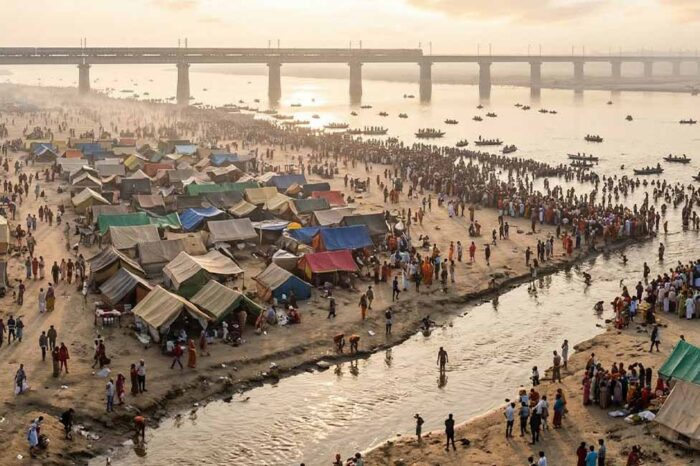
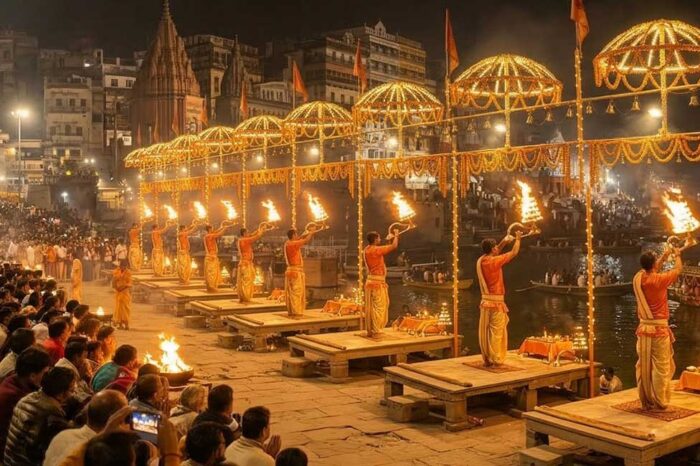
No state in India – perhaps in the world – carries the weight of religious significance that Uttar Pradesh does. Varanasi, also called Kashi or Benares, is one of the world’s oldest living cities and the holiest in Hinduism. Performing the Ganga Aarti at Dashashwamedh Ghat at dusk is one of those once-in-a-lifetime spiritual experiences. Ayodhya, the birthplace of Lord Rama, has been transformed into one of India’s grandest pilgrimage cities, with the newly built Ram Mandir drawing millions of devotees. Mathura and Vrindavan together form the spiritual universe of Lord Krishna, with hundreds of temples celebrating his life and legend. Sarnath – where the Buddha first turned the Wheel of Dharma – draws Buddhist pilgrims from across the world. Prayagraj is home to the Triveni Sangam, the sacred confluence of three rivers, and hosts the Kumbh Mela, the largest human gathering on Earth.
Uttar Pradesh is where Indian classical culture took its deepest roots. Kathak – one of India’s eight classical dance forms – was born and refined in the courts of Lucknow and Varanasi. The Lucknawi tehzeeb (etiquette and refinement) is legendary – a culture of grace, poetry, and hospitality that produced the rich tradition of Urdu literature and Ghazals. The state’s cuisine is a chapter in itself: Lucknow’s Awadhi biryani and galouti kebabs, Agra’s petha, Mathura’s peda, Varanasi’s baati chokha, and the street foods of Prayagraj are all iconic in their own right. Chikankari embroidery from Lucknow and the Banaras silk saree are world-renowned crafts that turn fabric into poetry. Music, food, craft, and language all come together in UP to create a cultural tapestry that is uniquely, unmistakably Indian.
Uttar Pradesh wears its festivals like a crown. The Kumbh Mela held at Prayagraj every 12 years is the single largest peaceful gathering of human beings on Earth – over 40 million people in a single day during the 2019 Maha Kumbh. Diwali in Ayodhya is a spectacular event where the banks of the Saryu River are lit with over a million diyas, visible from the sky and setting world records. Holi in Mathura and Vrindavan is the original, most exuberant celebration of the festival of colours, stretching over a week – with Lathmar Holi in Barsana being particularly famous. The Lucknow Mahotsav is a week-long cultural extravaganza celebrating Nawabi art, craft, cuisine, and performance. Every festival in UP is not just a celebration – it is a statement of faith, identity, and belonging.
Beyond its cities and shrines, Uttar Pradesh holds remarkable natural treasures. Dudhwa National Park, tucked on the Nepal border, is a dense Terai forest home to the Bengal Tiger, one-horned Rhinoceros, and Barasingha (swamp deer) – a rare combination found almost nowhere else in India. Chambal Wildlife Sanctuary along the Chambal River is a refuge for the Gharial crocodile, Gangetic dolphin, and Indian skimmer. The Sandi Bird Sanctuary and Okhla Bird Sanctuary draw ornithologists and bird lovers from across the country. The Vindhya and Kaimur hill ranges in the south of the state offer trekking, caves, and waterfalls that are still largely undiscovered by mainstream tourism. Nature in UP is quieter, deeper, and more primal than the cities suggest.
Uttar Pradesh is located in the north-central part of India, occupying the fertile Gangetic plain between the Himalayas to the north and the Vindhya range to the south. It shares borders with nine states and Nepal: Uttarakhand and Himachal Pradesh to the north, Haryana and Delhi to the northwest, Rajasthan to the west, Madhya Pradesh to the south, Chhattisgarh and Jharkhand to the southeast, Bihar to the east, and Nepal to the north. This central, landlocked position has historically made UP the crossroads of Indian civilisation, trade, and conquest.
Uttar Pradesh has three distinct seasons. Summers (April–June) are harsh and scorching, with temperatures reaching up to 45°C – not ideal for sightseeing. Monsoons (July–September) bring heavy rainfall and high humidity, but also give the countryside a lush, green freshness. The best time to visit is from October to March, when winters bring cool, clear weather perfect for exploring forts, ghats, wildlife parks, and temples. The peak season for spiritual visits aligns with major festivals – Diwali in October/November, Holi in March, and Kumbh Mela (every 6 and 12 years at Prayagraj). For the Taj Mahal, a full moon night visit is a bucket-list experience available on select nights.
By Road: Uttar Pradesh has one of India’s most extensive road networks, with national highways and expressways connecting all major cities. The Yamuna Expressway (Agra to Delhi), Agra-Lucknow Expressway, and Purvanchal Expressway are world-class roads that make intercity travel fast and scenic. Private taxis, state buses (UPSRTC), and Volvo coaches are all reliable options.
By Rail: UP is the rail hub of India. Lucknow, Varanasi, Agra, Prayagraj, Mathura, and Kanpur are all major railway junctions connected to every corner of the country. Trains like the Shatabdi, Rajdhani, Vande Bharat, and Gatimaan Express offer premium comfort and speed. The Gatimaan Express, running between Delhi and Agra, is India’s fastest train, covering the distance in under 2 hours.
By Flight: Lucknow’s Chaudhary Charan Singh International Airport and Varanasi’s Lal Bahadur Shastri International Airport handle regular international flights. Agra has the Agra Airport with domestic connections. Prayagraj, Gorakhpur, and Kushinagar also have operational airports. Delhi’s Indira Gandhi International Airport – just 200 km from Agra – serves as the main international gateway for most UP-bound travellers.
Few regions on Earth carry a history as ancient, complex, and consequential as Uttar Pradesh. Archaeological findings at Hastinapur, Ahichhatra, and Mathura trace human habitation back to the Painted Grey Ware culture of 1200 BCE. The Mahabharata and Ramayana – the world’s two longest epic poems – are set almost entirely within this geography. The region was the epicentre of the Mauryan Empire under Ashoka, who built his pillars and stupas across UP after his conversion to Buddhism at Sarnath. The Gupta Empire, India’s golden age of science, art, and literature, also flourished here. Then came the Delhi Sultanate and the magnificent Mughal Empire, which left Agra, Fatehpur Sikri, and countless monuments as permanent testaments to their reign. The Nawabs of Awadh in Lucknow created a culture of refinement unparalleled in 18th-century India. The First War of Independence in 1857 – the Sepoy Mutiny – ignited in Meerut and swept through Lucknow, Kanpur, and Jhansi. After independence in 1947, Uttar Pradesh became the largest and politically most significant state of the Indian Union – a position it holds to this day.
Uttar Pradesh is not just a destination – it is a dimension. Every city is a universe, every ghat a library, every monument a love letter to human ambition. Whether you are seeking spiritual solace, historical depth, cultural richness, culinary adventure, or wild nature, UP delivers it all – on a scale that simply overwhelms and inspires. This is the soul of India, and it is waiting for you.
Agra is the city the world knows. Home to the Taj Mahal – the marble monument to eternal love – Agra is the single most visited city in India by international tourists. Built by Emperor Shah Jahan between 1632 and 1653, the Taj Mahal is a UNESCO World Heritage Site and one of the Seven Wonders of the World. But Agra is far more than its most famous monument. The Agra Fort – another UNESCO site – is a colossal red sandstone fortress from which Shah Jahan spent his last years imprisoned by his son Aurangzeb, gazing across the river at the Taj. Itmad-ud-Daula, often called the “Baby Taj,” is an exquisite marble mausoleum that predates the Taj and is considered a dry run in its design. Agra’s bustling markets offer petha (crystallised gourd sweets), leather goods, marble inlay work, and carpets. A sunrise visit to the Taj – with the mist rising off the Yamuna and the marble turning from pink to gold to white – is simply one of the most beautiful sights on Earth.
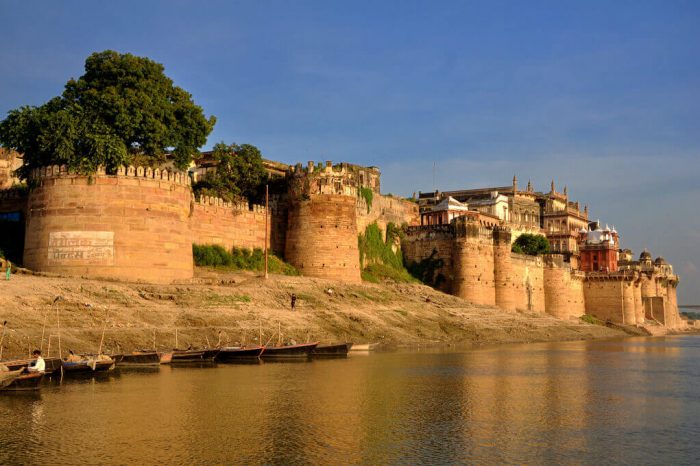
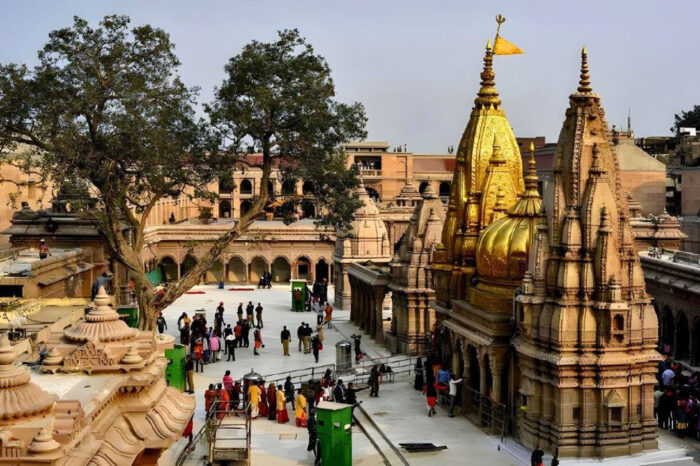
Varanasi is not a city – it is a spiritual force. Also called Kashi or Benares, this is one of the world’s oldest continuously inhabited cities and the holiest in Hinduism. Situated on the west bank of the Ganga, the city’s 88 ghats are its beating heart. The Ganga Aarti at Dashashwamedh Ghat – performed every evening with fire, chanting, and brass lamps – is a ritual so powerful it silences even the most sceptical traveller. Manikarnika Ghat, the “burning ghat,” is where cremations happen 24 hours a day, 365 days a year – a reminder that for Varanasi, death is not the end but the doorway. The narrow lanes of the old city are a labyrinth of temples, tea stalls, silk weavers, and sitar shops. A boat ride on the Ganga at dawn – watching pilgrims bathe, priests pray, and the sun rise over an ancient skyline – is a transformative experience. Varanasi makes you feel that time is circular, not linear.
Lucknow is elegance in bricks and mortar. The capital of Uttar Pradesh, Lucknow was the seat of the Nawabs of Awadh – rulers famous for their poetry, cuisine, music, and courtly manners. This heritage is visible everywhere: in the grand Bara Imambara with its labyrinthine Bhul Bhulaiya maze, in the ornate Rumi Darwaza that rivals any gate in Asia, in the bullet-scarred walls of the Residency where British and Indian soldiers fought during the 1857 uprising. But Lucknow is also vividly alive. The city’s chikankari embroidery is world-famous – intricate white-on-white threadwork on muslin that takes weeks to complete. Tunday Kebabi’s galouti kebabs, melting on the tongue with 160 spices, and the city’s legendary Awadhi biryani make Lucknow a mandatory stop on any food traveller’s itinerary. Lucknow is proof that a city can be simultaneously ancient and alive, regal and welcoming.
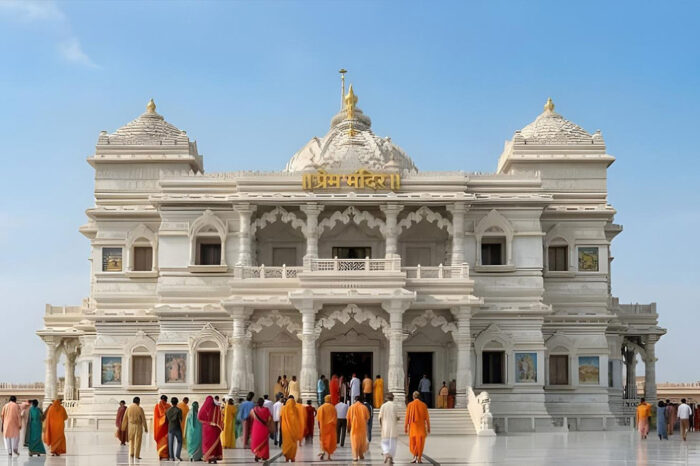
Mathura and Vrindavan are two cities, one soul – the universe of Lord Krishna. Mathura, the birthplace of Krishna, is dotted with over 3,000 temples. The Shri Krishna Janmabhoomi Temple – built at the exact spot of Krishna’s birth – draws millions of pilgrims every year. Dwarkadhish Temple, with its soaring shikhara and painted interiors, is one of the most stunning temples in North India. Vrindavan, just 15 km away, is where the young Krishna played, danced, and performed his divine Raas Lila with the Gopis. The ISKCON Vrindavan temple draws visitors from across the world, while the ancient Banke Bihari Temple’s constant sound of bells and bhajans creates an atmosphere of pure devotion. Holi here is legendary – the Lathmar Holi in nearby Barsana, where women playfully beat men with sticks, is the most joyous, colourful, uninhibited festival experience in India.
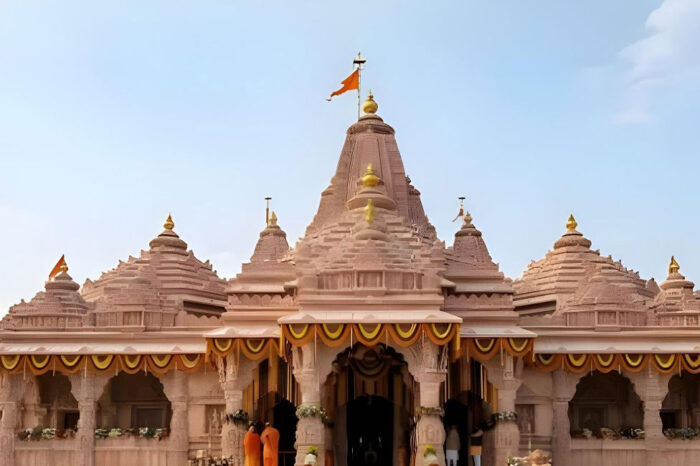
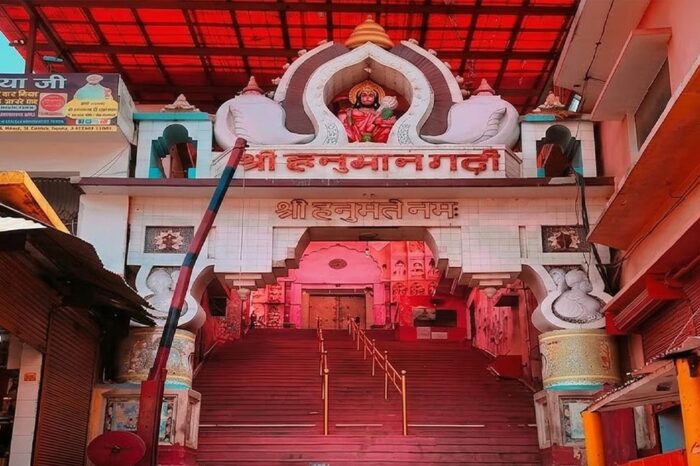
Ayodhya is the birthplace of Lord Rama – the seventh avatar of Vishnu and the hero of the Ramayana, one of the world’s greatest epics. This ancient city on the banks of the Saryu River is considered one of the seven sacred cities of Hinduism (Sapta Puri). The newly constructed Ram Mandir – consecrated in January 2024 – is a towering pink sandstone temple that has transformed Ayodhya into one of India’s grandest pilgrimage destinations. Hanuman Garhi, the Kanak Bhawan, Nageshwarnath Temple, and Sita ki Rasoi are among the many sacred sites that fill the city’s spiritual landscape. Diwali in Ayodhya is a world-record spectacle – the banks of the Saryu are lit with over a million earthen lamps, and the entire city glows like a living flame. Ayodhya is not just about religion – it is about the idea that certain places on Earth carry a permanent charge of the sacred.
Prayagraj – formerly Allahabad – holds a singular distinction: it is home to the Triveni Sangam, the confluence of three rivers – the Ganga, Yamuna, and the mythical underground Saraswati. This is considered the most sacred bathing spot in Hinduism, and the site of the Kumbh Mela – the world’s largest human gathering, held every 12 years. The Allahabad Fort, built by Akbar in 1583, stands at this confluence and contains the undying Akshaya Vat (immortal banyan tree). Anand Bhavan, the ancestral home of the Nehru-Gandhi family, is a museum and a window into India’s independence movement. Alfred Park (now Chandrashekhar Azad Park), where freedom fighter Azad died fighting British forces in 1931, is a landmark of the independence struggle. Prayagraj is where geography, mythology, history, and politics all converge – literally and symbolically.
Fatehpur Sikri is one of the most haunting and beautiful places in India – a perfectly preserved Mughal ghost city, abandoned over 400 years ago and untouched since. Built by Emperor Akbar between 1571 and 1585 as his capital, the city was deserted after just 14 years, most likely due to a water crisis. It stands today exactly as Akbar left it – a UNESCO World Heritage Site comprising the Diwan-i-Khas (Hall of Private Audience), the Panch Mahal (five-storey open palace), the Jodha Bai Palace, and the magnificent Buland Darwaza – the largest gateway in the world. Walking through Fatehpur Sikri is like finding a clock that stopped mid-tick. The red sandstone city glows amber in the afternoon light, and the silence is profound – broken only by the call to prayer from the Jama Masjid within the complex.
Dudhwa National Park is Uttar Pradesh’s wild secret. Located on the Indo-Nepal border in the Lakhimpur Kheri district, this dense Terai forest is one of the last remaining habitats of the Bengal Tiger and the one-horned Indian Rhinoceros in the same park – a rarity in India. Covering 811 square km, the park is also home to the Barasingha (swamp deer), gharial, leopard, elephant, and over 400 species of birds. The best way to experience Dudhwa is on an elephant-back safari through the tall elephant grass – a primal, spine-tingling encounter with wilderness at its most untamed. The park is open from November to June (closed during monsoon). Dudhwa is not for those seeking comfort over encounter – it is for those who want to look a tiger in the eye and understand why we must protect what remains.
Orchha is Uttar Pradesh’s best-kept secret. This small medieval town on the banks of the Betwa River was the capital of the Bundela Rajput kings and is packed with monuments of extraordinary beauty. The Orchha Fort complex contains the Jahangir Mahal (a stunning palace built for Emperor Jahangir’s one-night visit), the Raja Mahal with its painted interiors, and the Rai Praveen Mahal. The Chaturbhuj Temple, built in a cross shape and dedicated to Lord Vishnu, is one of the most architecturally striking temples in the region. But Orchha’s most distinctive feature is its cenotaphs – towering Mughal-style chhatris built in honour of the Bundela kings, rising dramatically from the riverbank and reflected in the water. At sunset, with the Betwa shimmering and the chhatris glowing gold, Orchha looks like a painting that got up and walked into reality.
Sarnath is where one of the world’s great religions was born. It was here, in the deer park called Isipatana, that the Buddha – having attained enlightenment in Bodh Gaya – came to deliver his first sermon to five disciples. This event set Buddhism in motion as a living tradition that would spread across Asia and the world. The Dhamek Stupa, rising 43.6 metres from the ground, marks the spot of that first sermon and is one of the most significant Buddhist monuments on Earth. The Mulagandhakuti Vihara contains paintings by Japanese artist Kosetsu Nosu depicting key scenes from Buddha’s life. The Sarnath Museum houses the Lion Capital of Ashoka – the original, not a replica – which became India’s national emblem. Sarnath is a short drive from Varanasi and should never be missed – it is a place of supreme historical and spiritual gravity.
98742 84569
98743 61951
Mon-Sat 11.00AM-07.30PM