

- Home
- INDIA
- Offbeat India
- International
- Theme Tours
- Handpicked
- Plan Your Trip
Punjab
Punjab Tour Packages
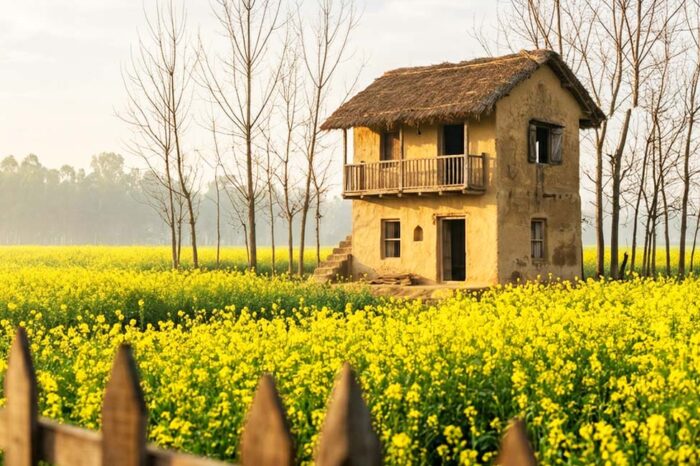
Punjab – A Journey to the Land of Five Rivers Vibrant, Valiant, Vivacious – Punjab. A land where the soul of India beats loudest – through thundering dhols, rivers of golden wheat, and the eternal glow of the Golden Temple. […]
Punjab – A Journey to the Land of Five Rivers
Vibrant, Valiant, Vivacious – Punjab.
A land where the soul of India beats loudest – through thundering dhols, rivers of golden wheat, and the eternal glow of the Golden Temple. Punjab is a universe of unbridled energy, where warrior saints built empires and farmers fed a nation. A land where every village has a story of sacrifice, every kitchen overflows with generosity, and every festival is a riot of color and joy. Punjab embodies the perfect fusion of faith, food, and festivity – a green-gold heartland that has witnessed the rise of empires, the pain of partition, and the unbreakable resilience of its people.
Punjab Tourism: A Quick View of the State
Capital: Chandigarh
Official Language: Punjabi
Dial Code: 0172
Population: 27,704,236 (as of 2011)
Currency: Indian Rupee (INR)
Time Zone: UTC+05:30 (IST)
Area: 50,362 square km
Highlights of Punjab Tourism: Through the Looking Glass
Historical Lens
To truly understand Punjab, you must walk through its extraordinary museums – each one a portal to a past that shaped modern India. The Partition Museum in Amritsar is unlike anything else in the world – the only museum dedicated entirely to the tragedy and triumph of the 1947 Partition, housing thousands of personal testimonies, photographs, and artifacts. The Punjab State Museum in Chandigarh is a treasure trove of Indus Valley relics, ancient coins, Kangra miniature paintings, and Sikh-era weaponry. The Maharaja Ranjit Singh Museum in Amritsar celebrates the Lion of Punjab’s magnificent Sikh Empire through armour, manuscripts, and royal portraits. The breathtaking Virasat-e-Khalsa in Anandpur Sahib is a modern marvel – a museum that tells 500 years of Sikh history through immersive galleries, and its stunning architecture alone is worth the journey.
Architectural Lens
Punjab may not have towering desert forts like Rajasthan, but its fortresses carry equally fierce legends. Gobindgarh Fort in Amritsar – built in the 18th century – served as the treasury of Maharaja Ranjit Singh’s empire and is now a heritage complex with sound and light shows. Qila Mubarak in Patiala is a sprawling fort-palace complex that took six decades to build and remains one of the finest examples of Punjabi Mughal architecture. Bathinda’s Qila Mubarak is considered one of the oldest surviving forts in India, with origins dating back to the 6th century AD, and it was the prison of Prithviraj Chauhan after his defeat. The Rose Garden in Chandigarh – Asia’s largest rose garden – and Le Corbusier’s iconic Capitol Complex (a UNESCO World Heritage Site) showcase Punjab’s architectural evolution from ancient fortresses to visionary modern design.
Religious Lens
No place on earth compares to the spiritual gravity of the Golden Temple – Harmandir Sahib – in Amritsar. The holiest shrine of the Sikh faith floats on the sacred Amrit Sarovar (Pool of Nectar), its gilded dome shimmering at dawn in a vision that stops your heart. The langar (community kitchen) here feeds over 100,000 people every single day – making it the largest free kitchen in the world, open to all, of every faith. Anandpur Sahib is the birthplace of the Khalsa – the order of initiated Sikhs founded by Guru Gobind Singh in 1699 – and remains one of the most significant pilgrimage sites in Sikhdom. Fatehgarh Sahib commemorates the supreme sacrifice of Guru Gobind Singh’s two younger sons. Durgiana Temple in Amritsar mirrors the Golden Temple’s architecture and is a revered Hindu shrine dedicated to Goddess Durga. The Mata Lal Devi Mandir in Amritsar is a fascinating cave temple, a spiritual maze of tunnels and shrines.
Cultural Lens
Punjab’s culture hits you like a dhol beat – loud, joyful, and impossible to ignore. The Bhangra and Giddha dance forms are now performed globally, but here they are a way of life – danced at every harvest, wedding, and celebration. Phulkari, the ancient art of floral needlework embroidered on fabrics, is one of Punjab’s most prized textile traditions – each piece telling a story through color and thread. The food is legendary: Makki di roti and Sarson da saag is Punjab’s soul food – cornbread with mustard greens, finished with a generous dollop of white butter. Dal Makhani, Chole Bhature, and Amritsari Kulcha are dishes that have conquered the world. Lassi here is not a drink – it is a religion. And the Patiala Peg (an unusually generous measure of spirits, twice the standard) was born in the royal courts of Patiala, a fine metaphor for Punjab’s everything-extra spirit.
Festive Lens
Punjab’s festivals are as mighty as its rivers. Baisakhi – celebrated every April 13th – is the harvest festival and also the anniversary of the founding of the Khalsa in 1699. The entire state erupts in Bhangra, fairs, and processions; Amritsar’s Baisakhi at the Golden Temple is a sight of incomparable grandeur. Lohri is a winter bonfire festival celebrated in January, where families gather around massive fires, toss sesame seeds and jaggery into the flames, and dance through the night. Gurpurab – the birth anniversary of Guru Nanak Dev Ji – sees Punjab blanketed in golden candlelight, with langar on every street and Gurbani (sacred hymns) flowing from every gurudwara. Holla Mohalla at Anandpur Sahib is a three-day Sikh martial arts festival featuring gatka (traditional stick fighting), horse riding, and archery demonstrations – unlike anything you will witness elsewhere in India.
Nature’s Lens
Punjab’s natural world is quieter than its culture, but no less extraordinary. Harike Wetland – where the Beas and Sutlej rivers meet – is a Ramsar-designated wetland of international importance, home to over 200 species of migratory birds including the endangered Siberian crane. Bir Bhadson Wildlife Sanctuary near Patiala is a haven for blackbuck, blue bull, and wild boar, set amid scrub forest. Abohar Wildlife Sanctuary in Fazilka is dedicated to protecting the endangered Indian blackbuck, which the local Bishnoi community has protected for generations as an act of faith. Sukhna Lake in Chandigarh, created by Le Corbusier, draws migratory birds and morning walkers alike and is one of the most serene urban escapes in North India.
Interesting Facts about Punjab – Forgotten Fables
- Punjab literally means “Land of Five Rivers” – Panj (five) + Aab (water) – referring to the Jhelum, Chenab, Ravi, Beas, and Sutlej rivers.
- The Golden Temple’s langar feeds approximately 100,000 people daily, every single day of the year – entirely free – making it the world’s largest free community kitchen.
- Punjab contributes approximately 50% of India’s wheat and 25% of its rice to the national food pool, earning the title “Granary of India” or “Bread Basket of India.”
- Chandigarh – designed by Swiss-French architect Le Corbusier – is one of the best examples of planned urban design in post-independence India and is a UNESCO World Heritage Site (Capitol Complex).
- The Wagah Border ceremony between India and Pakistan is one of the most dramatic military pageants on earth – a nightly flag-lowering ritual watched by thousands on both sides of the border.
- Amritsar was founded in 1577 by Guru Ram Das, the fourth Sikh Guru, who excavated the sacred pool that now surrounds the Golden Temple.
- The Jallianwala Bagh massacre of April 13, 1919 – in which British General Dyer ordered troops to fire on a peaceful gathering – is one of the defining tragedies of India’s independence struggle.
Location of Punjab
Punjab is located in the northwestern part of India, nestled between the Himalayan foothills in the north and the Thar Desert’s edge in the south. It shares borders with Jammu & Kashmir and Himachal Pradesh to the north, Haryana and Rajasthan to the east and south, and Pakistan to the west. The international border with Pakistan runs for approximately 425 km, and this shared history between two now-separate lands is deeply embedded in Punjab’s soul. The five rivers – Jhelum, Chenab, Ravi, Beas, and Sutlej – that once flowed freely across undivided Punjab gave the state its name and nourished one of the oldest agricultural civilizations on earth.
Best Time to Visit Punjab
Punjab experiences a continental climate with extreme summers and cool winters. October to March is the ideal time to visit – winters are crisp and pleasant (10°C to 20°C), perfect for sightseeing, attending festivals like Lohri, and savoring the harvest landscape of golden mustard fields stretching to the horizon. April is ideal for Baisakhi celebrations. Avoid May to August, when temperatures can soar above 45°C and monsoon humidity sets in. The winter morning mist over the Golden Temple is one of the most quietly beautiful sights in all of India – worth planning your trip around.
How to Get to Punjab
By Road: Punjab has an excellent network of national and state highways. The NH1 (Grand Trunk Road) – one of Asia’s oldest and longest roads, built by Sher Shah Suri – runs straight through the heart of Punjab from Delhi to Amritsar. State-run buses and private taxis connect all major cities efficiently. Driving through Punjab’s countryside – past wheat fields, canal roads, and roadside dhabas – is a journey in itself.
By Rail: Punjab is extremely well connected by rail. Amritsar, Ludhiana, Chandigarh, Patiala, Jalandhar, and Bathinda are major railway junctions with direct trains to Delhi, Mumbai, Kolkata, and other metros. The Shatabdi Express connects Amritsar to Delhi in roughly 6 hours, making a weekend trip very viable.
By Flight: Sri Guru Ram Dass Jee International Airport in Amritsar is Punjab’s main international airport, with direct flights to the UK, Canada, UAE, and Singapore – reflecting the large Punjabi diaspora worldwide. Chandigarh International Airport connects to major Indian cities and select international destinations. For more options, Indira Gandhi International Airport in Delhi is approximately 450 km away and serves as the primary international gateway.
History of Punjab
Punjab’s history is one of the most layered and dramatic in all of South Asia. Archaeological excavations at Rupnagar (Ropar) and other sites confirm that the Indus Valley Civilization thrived here over 5,000 years ago. The region has been at the crossroads of every major invasion, trade route, and empire – from the Persian Achaemenids and Alexander the Great to the Mauryans, Guptas, and Mughals. In the 16th century, the ten Sikh Gurus transformed Punjab into the spiritual and political heart of the Sikh faith. Guru Nanak Dev Ji – born in Nankana Sahib (now in Pakistan) in 1469 – founded Sikhism and changed the course of the subcontinent’s spiritual history forever.
Maharaja Ranjit Singh, the Lion of Punjab, united the Sikh misls (confederacies) in the late 18th and early 19th centuries and built the Sikh Empire – one of the last great empires of pre-colonial India – stretching from the Khyber Pass to the Sutlej. After his death in 1839, the empire weakened and was eventually absorbed by the British Raj following the Anglo-Sikh Wars of the 1840s. Punjab became the site of some of the fiercest resistance to British rule, including the Jallianwala Bagh massacre of 1919 and the Ghadar Movement. The Partition of 1947 split Punjab between India and Pakistan in one of history’s most traumatic mass migrations – an event whose scars and stories are still alive in every Punjabi family. The Indian state of Punjab was further reorganized in 1966 into the present-day states of Punjab, Haryana, and Himachal Pradesh. Today, Punjab stands as one of India’s most prosperous and forward-moving states – its people as resilient and generous as the rivers that named them.
Amritsar
There is no city in India quite like Amritsar. It is the spiritual capital of the Sikh faith and one of the most emotionally charged destinations on the subcontinent. At its heart is Harmandir Sahib – the Golden Temple – a sight so luminous and serene that it silences even the most jaded traveller. Built in the 16th century and rebuilt in the 19th century with 400 kg of pure gold donated by Maharaja Ranjit Singh, the temple floats on the Amrit Sarovar (Pool of Nectar) and radiates a calm that is physically palpable. Jallianwala Bagh – just a short walk from the temple – is a haunting, sacred garden where over 1,000 people were massacred by British troops in 1919; the bullet holes in the walls are still visible, a reminder that freedom is never free. Every evening, the Wagah Border retreat ceremony – just 30 km from Amritsar – draws massive crowds on both the Indian and Pakistani sides for a synchronized, military-precision flag-lowering ritual that is equal parts patriotic pageantry and human drama. Amritsar’s food scene is legendary: Amritsari Kulcha, Chole, and Lassi from the old city’s narrow lanes have no equal anywhere in the world.
Chandigarh
Chandigarh is India’s grand experiment in modern urban design – and one that succeeded brilliantly. Planned by Swiss-French architect Le Corbusier after Partition displaced the old capital Lahore to Pakistan, Chandigarh was built from scratch in the 1950s as a model city of wide boulevards, sector-based planning, and modernist architecture. The Capitol Complex – home to the Punjab and Haryana High Court, Legislative Assembly, and Secretariat – is a UNESCO World Heritage Site and Le Corbusier’s masterpiece in India. The Rock Garden, created entirely from industrial and urban waste by a government official named Nek Chand, is one of the most extraordinary works of folk art in the world – a hidden kingdom of stone and ceramic sculptures spread across 40 acres. Sukhna Lake is the city’s soul – a tranquil reservoir at the foothills of the Shivaliks where migratory birds congregate every winter. Sector 17, the commercial hub, and Elante Mall represent the modern, affluent face of a city that consistently tops India’s quality-of-life rankings.
Patiala
Patiala is a city of royal grandeur and unexpected elegance. The former capital of the Patiala princely state, it is home to Qila Mubarak – a magnificent fort-palace complex that took over 60 years to build, featuring intricate Mughal and Rajput architecture, zenana (women’s quarters) with stunning mirror work, and a museum that houses the Patiala Necklace (a jaw-dropping jewelled piece that once held the world’s largest yellow diamond, the DeBeers Centenary Diamond). Sheesh Mahal (Palace of Glass) is another architectural gem. Patiala is also famous for its distinctive salwar – the Patiala salwar – a voluminous, pleated trouser style that became a national fashion staple, and for the legendary Patiala Peg, a famously generous measure of spirits that speaks to the city’s unbothered sense of abundance. The city’s bazaars are a fantastic place to shop for Phulkari embroidery, jutis (traditional footwear), and sweets like Pinni and Panjiri.
Ludhiana
Ludhiana is Punjab’s industrial powerhouse – the “Manchester of India” – and the largest city in the state. It may not have the historical glamour of Amritsar or the planned beauty of Chandigarh, but it pulses with an energy that is purely Punjabi: entrepreneurial, ambitious, and utterly relentless. The Maharaja Ranjit Singh War Museum is a significant attraction here, housing tanks, fighter jets, and military equipment along with a powerful account of Punjab’s role in India’s wars. The Punjab Agricultural University Museum gives you a fascinating window into the Green Revolution that transformed Punjab from a food-deficit region into India’s granary. The Lodhi Fort – built by the Lodhi dynasty – is a quiet historical gem worth visiting. Ludhiana is also the best base for exploring the heritage villages and fairs of the Malwa region.
Anandpur Sahib
Anandpur Sahib is one of the holiest cities in Sikhism and a place of such profound spiritual significance that merely arriving feels like an act of devotion. It was here that Guru Gobind Singh Ji founded the Khalsa – the order of the pure – on Baisakhi of 1699, an event that transformed the Sikh faith forever. Kesgarh Sahib, one of the five Takhts (temporal seats of Sikh authority), marks the very spot of the Khalsa’s creation. Virasat-e-Khalsa – the Heritage of Khalsa Museum – is a state-of-the-art institution that tells 500 years of Punjabi and Sikh history through interactive galleries; its dramatic twin-building architecture, designed by Israeli architect Moshe Safdie across a river gorge, is among the most spectacular museum buildings in Asia. Holla Mohalla, celebrated the day after Holi, turns Anandpur Sahib into a living battlefield of Sikh martial traditions – gatka demonstrations, horse stunts, and mass langars. The Shivalik Hills backdrop and the Anandpur Sahib Fort (Qila Anandgarh) complete a destination that is spiritually charged and visually magnificent.
Bathinda
Bathinda is one of Punjab’s oldest and most historically significant cities, and it is enjoying a dramatic revival. Qila Mubarak – not to be confused with Patiala’s fort of the same name – is Bathinda’s crown jewel, believed to have been built in the 6th century AD and one of the oldest surviving forts in northern India. Prithviraj Chauhan was imprisoned here after his defeat at the Second Battle of Tarain in 1192. The Thermal Plant Lake near Bathinda is a surprising natural oasis – a large artificial lake that has become a popular picnic spot with boating and a rest house. The Rose Garden here is fragrant and peaceful. Bathinda is also a convenient base for visiting Talwandi Sabo (Damdama Sahib) – one of the five Takhts of Sikhism – and the Mata Lakhhi Devi temple.
Pathankot
Pathankot is Punjab’s northern gateway – the transit point from which roads and railways fan out to Himachal Pradesh, Jammu & Kashmir, and Dalhousie. But it is more than a stopover. The Mukteshwar Temple in the heart of the city, dedicated to Lord Shiva, is a peaceful and important religious site. Ranjit Sagar Dam (Thein Dam) on the Ravi River – a short drive from Pathankot – is one of the largest rockfill dams in India, set amid breathtaking Shivalik scenery, with boating facilities on the reservoir. The Shahpur Kandi Fort, perched dramatically on a hilltop over the Ravi, offers sweeping views and a glimpse into medieval Punjabi military architecture. Pathankot also serves as the closest Punjab city to Dalhousie, making it a popular base for hill station holidays.
Rupnagar (Ropar)
Rupnagar – also known as Ropar – is Punjab’s connection to the ancient world. This quiet town on the banks of the Sutlej River was the site of one of the most significant Harappan civilization excavations in independent India, dating back to 2000 BCE. The Ropar Archaeological Museum houses artifacts from these excavations, including pottery, tools, and jewelry that predate recorded Indian history by millennia. Anandpur Sahib is just 45 km away, making Rupnagar a perfect pairing for history-minded travellers who want to journey from the Indus Valley to the Sikh era in a single day. Morinda, near Rupnagar, holds a deeply moving historical significance as the site where Guru Gobind Singh’s two younger sons – Sahibzada Zorawar Singh and Sahibzada Fateh Singh – were taken prisoner and martyred by the Mughals. The Fatehgarh Sahib gurudwara nearby commemorates this ultimate sacrifice with immense reverence.
Experiences
- The 10 Best Japan Festivals for Indian Travellers
 August 24, 2026
 - The Ultimate Japan Travel Guide: 17 Must-Visit Destinations
 August 17, 2026
 - Wine Tourism in India
 June 8, 2026
 - Anini Tour
 June 5, 2026
 - Tamia Hills Tour
 June 4, 2026
Call
98742 84569
98743 61951
Mon-Sat 11.00AM-07.30PMNewsletter
Uncategorized
- Tours in BlogApril 6, 2026
- Tours in Blog
- Required plugin "Meks Easy Photo Feed Widget" is required. Please install the plugin here. or read more detailed instruction about How to setup the plugin here
Connect to Us
Recent Tours
Rate & Review Us
Contact Info
- +91 98742 84569
- experience@ocean6.in
- 16, Suren Tagore Rd, Ekdalia, Ballygunge, Kolkata, West Bengal 700019
- Mon - Sat : 11.00 AM - 7.30 PM
Sunday : CLOSED
Newsletter
Quick Links
