

- Home
- INDIA
- Offbeat India
- International
- Theme Tours
- Handpicked
- Plan Your Trip
Puducherry
Puducherry Tour Packages
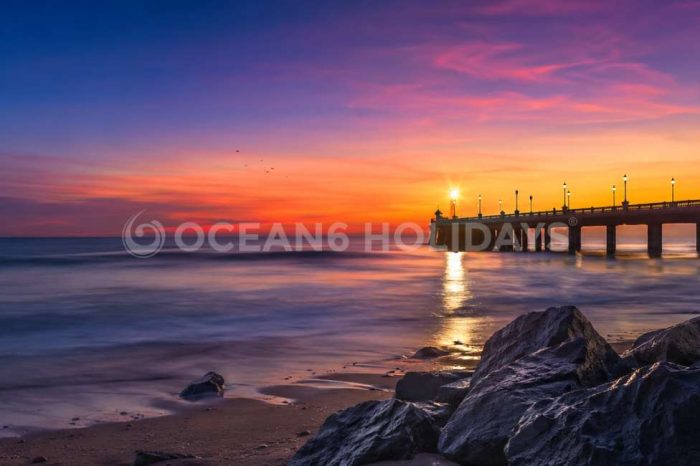
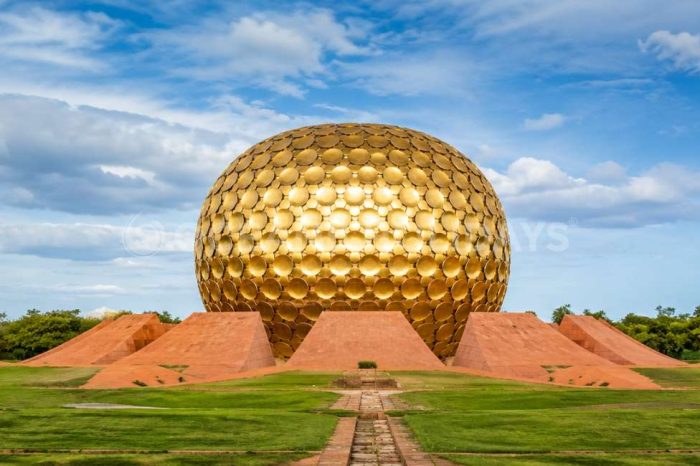
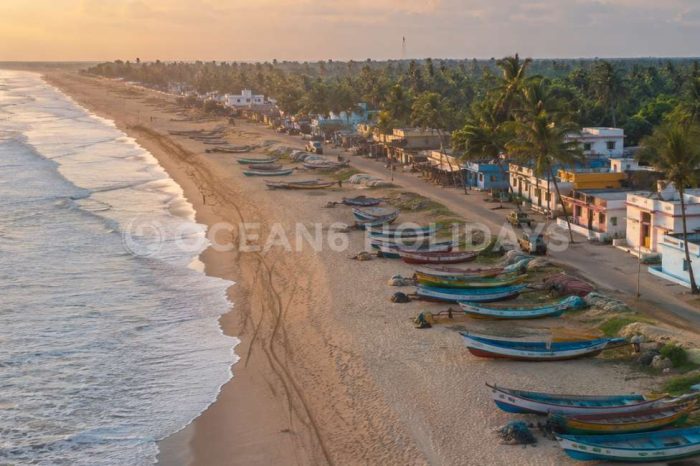
3N/4D Chennai Mahabalipuram Puducherry Tour
Five Rathas, Arjuna's Penance, Auroville, Beach, Museum, Temple
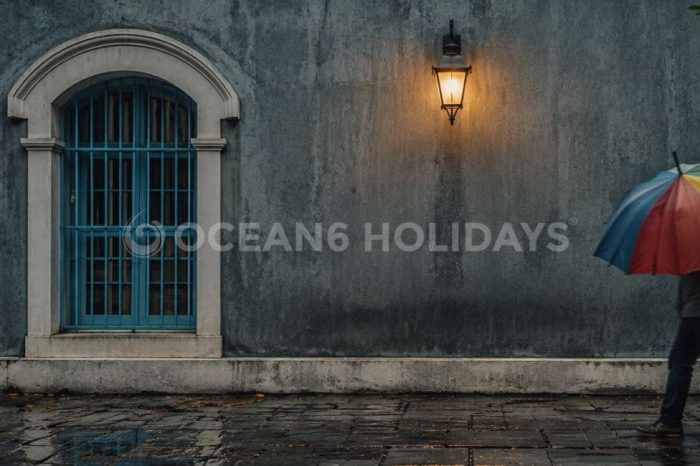
4N/5D Chennai Tirupati Puducherry Tour Package
Tirupati Temple, Tirumala Hill, Fort St. George Museum, Beach, Aurobindo Ashram
Puducherry Tour Packages
Puducherry – Where France Whispered to India
Serene, Soulful, Sublime – Puducherry.
A magical blend of two worlds, where cobblestone French boulevards meet vibrant Tamil streets. A land where mustard-yellow colonial villas stand shoulder-to-shoulder with ancient temples draped in marigolds. Puducherry embodies the perfect fusion of East and West – spirituality and art, croissants and coconut chutney – creating a coastal paradise that has witnessed centuries of trade, heard the prayers of saints, and held the dreams of seekers from across the globe, all waiting to be discovered.
Puducherry Tourism: A Quick View of the Territory
Capital: Puducherry
Official Languages: Tamil, French, Telugu, Malayalam
Dial Code: 0413
Population: 1,247,953 (as of 2011)
Currency: Indian Rupee (INR)
Time Zone: UTC+05:30 (IST)
Area: 479 square km
Highlights of Puducherry Tourism: Through the Looking Glass
Historical Lens
To truly experience Puducherry, you must first feel its layered past. The Puducherry Museum in the heart of White Town houses a remarkable collection – Roman amphorae, French colonial relics, Chola-era bronzes, and ancient coins that tell the story of a territory touched by multiple civilizations. Arikamedu, an archaeological site just 4 km from the town centre, was an Indo-Roman trading post dating back to the 2nd century BCE – proof that globalization is not a modern invention. The French Institute of Pondicherry, established in 1955, functions as a living archive of the region’s intellectual and colonial legacy, housing one of South Asia’s most comprehensive libraries on Indology.
Architectural Lens
In Puducherry, the streets themselves are the architecture. White Town (Ville Blanche) – the French Quarter – is a grid of mustard, indigo, and terracotta colonial mansions adorned with bougainvillea cascading over wrought-iron gates. The Basilica of the Sacred Heart of Jesus is a Gothic masterpiece with stunning stained-glass windows depicting the life of Christ. The Church of Our Lady of the Immaculate Conception, built in 1791, is among the oldest churches in India. Cross into the Tamil Quarter (Black Town) and the landscape shifts dramatically – ornate Dravidian gopurams rise above narrow lanes, temples gleam with fresh turmeric and jasmine. Two worlds, one town. Like a perfectly stitched quilt.
Religious Lens
Puducherry is where the sacred takes many forms. Sri Aurobindo Ashram, founded in 1926, draws thousands of spiritual seekers who come for meditation, yoga, and the profound stillness that fills its courtyards. Auroville’s Matrimandir – a golden geodesic sphere rising from a landscaped garden – is one of the most extraordinary meditation spaces on Earth. The Manakula Vinayagar Temple, a 500-year-old shrine to Lord Ganesha standing defiantly in the heart of the French Quarter, survived colonial attempts at demolition and continues to bless devotees, aided by its resident temple elephant, Lakshmi. The Arulmigu Vedapureeswarar Temple showcases Dravidian craftsmanship at its finest, with towering gopurams visible from across the town.
Cultural Lens
Puducherry is where your morning croissant arrives with coconut chutney – and nobody finds that strange. The French-Tamil cultural fusion here is unique in all of India. Street signs are bilingual, policemen wear French kepis (caps), and the local cuisine blends baguettes with filter coffee. Bharatanatyam coexists with French theatre. Traditional Tamil festivals like Pongal are celebrated with the same passion as Bastille Day on July 14th. Auroville’s craft workshops produce exquisite handmade paper, leather goods, incense, and pottery – artisanal India at its finest. Think of Puducherry as a cultural tossed salad – individually distinct ingredients, but magnificent together.
Festive Lens
Puducherry’s festivals mirror its dual soul. Bastille Day (July 14) is celebrated with a police parade in full French colonial uniform along the Promenade – the only place in India where this happens. The International Yoga Festival draws practitioners from 70+ countries every January to Auroville. Masi Magam sees thousands wade into the sea at Promenade Beach during the full moon in February-March, in a spectacular act of faith. The Kartik Festival turns the Promenade into a river of light as thousands of oil lamps are lit along the seafront – a sight that stays with you long after you’ve left.
Nature’s Lens
Don’t let Puducherry’s compact size fool you. Ousteri Lake (Osudu Lake) is a vast freshwater lake and bird sanctuary hosting migratory birds from as far as Siberia – over 100 species have been recorded. The Chunnambar Backwaters offer serene boat rides through mangrove channels to Paradise Beach – a pristine strip of white sand reachable only by boat, with no permanent structures and zero crowds. The Auroville Green Belt is an ecological miracle – over 2,000 acres of once-barren, eroded land reforested through decades of human effort. Beneath the sea, Puducherry’s coral reefs offer some of South India’s best scuba diving and snorkelling, teeming with sea turtles, moray eels, and reef fish.
Interesting Facts about Puducherry – Forgotten Fables
- Puducherry operates under a separate tax regime, allowing French wine and imported goods to be sold at significantly lower prices than the rest of India.
- The town was officially called “Pondicherry” until January 2006, when it was renamed Puducherry – its original Tamil name meaning “New Town.”
- The Matrimandir in Auroville houses the world’s largest optically perfect glass globe – a 70 cm crystal sphere used for focused meditation in complete silence.
- Puducherry’s police force still wears French colonial-era kepis (caps) as part of their uniform – a legacy surviving 70+ years of Indian independence.
- Auroville is home to people from over 60 nationalities, functioning as a living experiment in human unity – with no money used within the community.
- Despite remaining under French control until 1954, Puducherry was never officially declared independent – it was “de facto” transferred, and the formal treaty came only in 1962.
Location of Puducherry
Puducherry is a Union Territory on the southeastern Coromandel Coast of India, bordered by Tamil Nadu on three sides and the Bay of Bengal to the east. It lies approximately 162 km south of Chennai and 150 km north of Thanjavur. The territory is uniquely split into four non-contiguous districts: Puducherry (the main enclave), Karaikal (150 km south), Mahé (on the Kerala coast), and Yanam (near Andhra Pradesh) – four pieces of France, scattered across South India like islands of a different era.
Best Time to Visit Puducherry
The golden window is October to March – post-monsoon, with cool sea breezes, clear skies, and comfortable temperatures between 20°C and 32°C. April to June is hot and humid (up to 40°C), best avoided unless you love deserted streets. The Northeast Monsoon hits October to December – November can be wet, but the town looks lush, green, and wonderfully uncrowded. Winters (December to February) are perfect: the weather is pleasant, the Promenade is lively, and every café table is a front-row seat to the best weather in South India.
How to Get to Puducherry
By Road: Puducherry is 162 km from Chennai via the East Coast Road (ECR) – one of India’s most scenic coastal drives, lined with beach resorts, lagoons, and seafood shacks. State buses and private taxis run frequently. The journey itself is half the experience; the road hugs the Bay of Bengal for long stretches and is best driven at sunrise.
By Rail: Puducherry has its own railway station with direct trains from Chennai, Bangalore, Coimbatore, and several other cities. However, being a small station, connectivity is limited. Most travellers take trains to Villupuram Junction (36 km away) – a major rail hub – and travel to Puducherry by road from there.
By Flight: Puducherry Airport handles limited domestic flights with connectivity to Chennai and Bangalore. The nearest major international gateway is Chennai International Airport (162 km), from where a taxi down the ECR takes 2.5 to 3 hours. The drive is recommended – it sets the mood perfectly for what Puducherry offers.
History of Puducherry
Puducherry’s history reads like a story of empire, commerce, and spirituality layered over two millennia. Archaeological evidence at Arikamedu confirms that Roman merchants were trading here as early as the 2nd century BCE – amphora shards, Roman coins, and rouletted pottery prove this small coast was a global crossroads long before colonialism. The French East India Company arrived in 1674, establishing a trading post that grew into the most significant French colonial presence in India. The British and French fought over Puducherry several times – it changed hands five times between 1693 and 1816. Even after Indian independence in 1947, Puducherry remained under French administration until November 1, 1954 – the last major European colonial outpost to be peacefully transferred. The formal merger came in 1962. This French legacy lives on in the town’s laws, architecture, cuisine, and cultural identity. Then came Sri Aurobindo – revolutionary, philosopher, poet, and yogi – who arrived in 1910, transforming Puducherry from a forgotten colonial town into a global centre of consciousness and spiritual inquiry. Two legacies, one extraordinary place.
Puducherry
If you want to relive the grace of colonial elegance fused with the soul of ancient India, Puducherry is the place to be. The French Quarter with its colour-washed villas, the spiritual pull of the Ashram, the golden dome of the Matrimandir rising above Auroville’s forests, the sound of waves along the Promenade at dawn – Puducherry is a quintessential boutique destination. Small in size, immense in character. The sheer variety of experiences this Union Territory packs into 479 sq km will genuinely surprise first-time visitors. Plan mindfully – the town rewards slow travellers who linger over café au lait and conversations with ashramites. Here are the major areas and sights you should not miss.
White Town (French Quarter)
White Town is Puducherry’s crown jewel. Every lane is a postcard – mustard walls draped in bougainvillea, wrought-iron gates, French-style shuttered windows, and the distant sound of waves from the nearby sea. The Promenade (Boulevard de la Bourdonnais) runs along the Bay of Bengal, with the iconic Gandhi Statue standing tall against the sea wind. Rue Dumas, Rue Suffren, and Rue Saint-Louis are essential walks – lined with heritage cafés, boutique hotels in restored colonial villas, art galleries, and curio shops. It’s Paris in miniature – except warmer, cheaper, and with a Tamil temple at every other corner. Best explored on foot or bicycle between 6 AM and 9 AM, before the day heats up.
Sri Aurobindo Ashram
Founded in 1926 by the philosopher-revolutionary-yogi Sri Aurobindo and The Mother (Mirra Alfassa), this ashram is the spiritual heartbeat of Puducherry. Over 2,000 disciples live and work in its premises. The Samadhi – the burial site of Sri Aurobindo and The Mother – is draped in fresh flowers daily, and the silence around it is tangible. The ashram runs schools, a printing press, a library, handcraft units, and cultural programmes. It is, in essence, a city within a city. Visitors are expected to maintain silence. The fragrance of incense, the white marble courtyard, and the utter stillness make this one of the most powerful spaces in India – regardless of your faith.
Auroville
12 km north of Puducherry lies one of the world’s most extraordinary social experiments. Founded in 1968 by The Mother, Auroville is an international township conceived for human unity – with residents from 60+ nationalities living, farming, creating, and meditating together. At its heart is the Matrimandir – a stunning golden geodesic sphere rising 29 metres from manicured gardens, inside which meditators sit in complete silence around the world’s largest optically perfect glass globe. Auroville produces its own food, renewable energy, and artisanal goods. It has reforested over 2,000 acres of once-barren land. Visiting it is less like sightseeing and more like glimpsing a possible future for humanity. Book your inner chamber visit in advance.
Promenade Beach
The 1.5 km Promenade Beach is Puducherry’s living room. Unlike most Indian beaches, it is clean, car-free after a certain hour, and lined with heritage buildings on one side and the open sea on the other. Mornings bring yoga practitioners, cyclists, and early risers chasing the sunrise – and the sunrises here are legendary, the kind that make you rethink your life. The War Memorial, Gandhi Statue, and the Old Lighthouse punctuate the seafront. Swimming is not advisable due to strong undercurrents, but sitting on the promenade wall with a cup of masala chai watching the Bay of Bengal turn gold at dawn is an experience that costs nothing and leaves everything.
Paradise Beach
Accessible only by boat from Chunnambar Boat House (8 km south of town), Paradise Beach earns every syllable of its name. A pristine, uncrowded stretch of white sand flanked by casuarina trees, with the sea on one side and backwaters on the other. No permanent structures, no vendors, no noise – just sand, sea, and silence so complete you can hear yourself think. The boat ride through mangrove channels is itself an experience. Arrive early; the beach fills up by noon on weekends.
Chunnambar Backwaters
Where the Chunnambar River meets the sea, a rich ecosystem of mangroves, lagoons, and estuaries creates a backwater experience unique to Puducherry. Pedal boats, row boats, motor boats, and houseboats ply the winding channels. The view of the estuary at golden hour – water turning copper, egrets settling into the mangroves, distant sounds of the sea – is breathtaking. Think of it as Kerala’s backwaters on a smaller, more intimate scale. The fish curry at the boat house restaurant is not to be missed.
Arikamedu
Four kilometres south of town, Arikamedu is an ancient Indo-Roman trading settlement where international commerce thrived over 2,200 years ago. French archaeologist Sir Mortimer Wheeler uncovered Roman amphorae, rouletted pottery, and coins here in the 1940s, proving that Roman merchants were exchanging wine and olive oil for Indian spices, muslin, and gems. It’s not a polished tourist attraction – no grand ruins, no manicured gardens. But walking through this quiet archaeological site, knowing that Roman sailors once stood on this very shore, is quietly humbling. Globalization, it turns out, is ancient news.
Manakula Vinayagar Temple
Standing defiantly in the heart of the French Quarter, this 500-year-old temple dedicated to Lord Ganesha is one of Puducherry’s most beloved landmarks. Legend says the French tried to demolish it multiple times to widen colonial roads – but the idol reportedly moved on its own each time to avoid destruction. Today, it thrives: the golden gopuram glitters above the street, and the resident temple elephant Lakshmi blesses devotees at the entrance with a gentle touch of her trunk. The contrast of this vibrant, incense-filled temple surrounded by quiet French colonial buildings captures the spirit of Puducherry in a single frame.
Ousteri Lake
Spread over 390 hectares on the outskirts of Puducherry, Ousteri Lake (Osudu Lake) is a freshwater ecosystem and protected bird sanctuary. Over 100 species of birds have been recorded here, including migratory visitors from Siberia, Central Asia, and Northern Europe. The Ousteri Wetland is a peaceful, unhurried place – ideal for birdwatchers, photographers, and anyone who needs to decompress after too much café-hopping in White Town. Early mornings in winter are the best time, when the lake surface is still and filled with the sound of wings.
Experiences
- The 10 Best Japan Festivals for Indian Travellers
 August 24, 2026
 - The Ultimate Japan Travel Guide: 17 Must-Visit Destinations
 August 17, 2026
 - Wine Tourism in India
 June 8, 2026
 - Anini Tour
 June 5, 2026
 - Tamia Hills Tour
 June 4, 2026
Call
98742 84569
98743 61951
Mon-Sat 11.00AM-07.30PMNewsletter
Uncategorized
- Tours in BlogApril 6, 2026
- Tours in Blog
- Required plugin "Meks Easy Photo Feed Widget" is required. Please install the plugin here. or read more detailed instruction about How to setup the plugin here
Connect to Us
Recent Tours
Rate & Review Us
Contact Info
- +91 98742 84569
- experience@ocean6.in
- 16, Suren Tagore Rd, Ekdalia, Ballygunge, Kolkata, West Bengal 700019
- Mon - Sat : 11.00 AM - 7.30 PM
Sunday : CLOSED
Newsletter
Quick Links
