

- Home
- INDIA
- Offbeat India
- International
- Theme Tours
- Handpicked
- Plan Your Trip
Midnapore
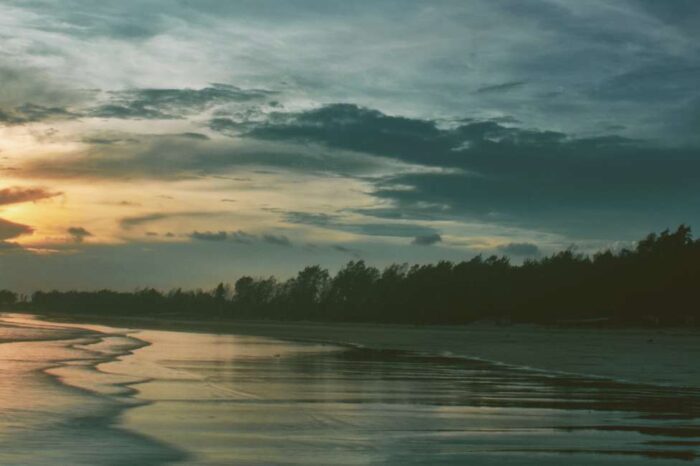
Midnapore – A Journey to the Land of Warriors and Waves Historic, Heroic, Heartfelt – Midnapore A region that rewrote history with bare fists and fearless hearts. Midnapore is not just a destination – it is a declaration. Where ancient […]
Midnapore – A Journey to the Land of Warriors and Waves
Historic, Heroic, Heartfelt – Midnapore
A region that rewrote history with bare fists and fearless hearts. Midnapore is not just a destination – it is a declaration. Where ancient forests hum with tribal songs, rivers flow with the stories of revolutionaries, and pristine beaches stretch endlessly into the Bay of Bengal. This is the land that gave British colonisers their toughest fight, the land that produced reformers who rebuilt society from its roots, and the land where Bengal’s raw, unhurried beauty still thrives untouched. Midnapore is a mosaic of red soil courage, emerald forest calm, and golden shore serenity – waiting for those bold enough to discover it.
Midnapore Tourism: A Quick View of the Region
District Headquarters: Medinipur (Midnapore)
Official Language: Bengali
STD Dial Code: 03222
Population: Approx. 9.1 Million (Paschim & Purba Medinipur combined, 2011)
Currency: Indian Rupee (INR)
Time Zone: UTC+05:30 (IST)
Area: Approx. 14,081 sq km (Paschim Medinipur district)
Highlights of Midnapore Tourism: Through the Looking Glass
Historical Lens
To understand Midnapore, you must first understand its defiance. This was the only district in British India to establish a parallel government – the Tamra Lipta Jatiya Sarkar – which ran independently for over two years during the Quit India Movement of 1942. Three British District Magistrates were assassinated here in succession: Douglas, Peddie, and Burge. The revolutionaries of Midnapore did not just protest; they governed. Start your historical journey at the Hijli Detention Camp – now the campus of IIT Kharagpur – where political prisoners were shot in cold blood in 1931, an event that shook Mahatma Gandhi and stirred the nation. The Birendra Smriti Museum and Midnapore College, one of the oldest colleges in Bengal, are essential stops for history seekers. Every alley in the old town carries a story written in courage.
Architectural Lens
Midnapore’s architecture is a layered conversation between eras. The stately Midnapore Collectorate, with its colonial-era columns and red-brick gravitas, stands as a silent witness to the power struggles of the past. The Jhargram Palace, a royal residence of the Jhargram Raj, is a magnificent blend of European and Bengal architectural traditions – its courtyards and corridors still breathe aristocratic grace. In Chandrakona, a town fondly called the “City of Temples,” you will find over 150 ancient terracotta temples, each adorned with intricate bas-relief panels depicting mythological tales. Mahishadal Raj Palace is another gem – a sprawling complex overlooking a lake, built by the Mahishadal Zamindars who were once patrons of the arts. These structures are not ruins; they are living monuments of a civilization that built with intention.
Religious Lens
Midnapore’s spiritual landscape is as diverse as its geography. The Radha-Shyamsundar Temple at Mahishadal is a revered Vaishnava shrine that draws thousands of devotees during Janmashtami, with celebrations that transform the entire palace precinct into a sea of devotion. Chandrakona’s dense cluster of terracotta temples dedicated to Shiva, Vishnu, and Durga represent some of Bengal’s finest examples of 17th and 18th-century religious art. At Belda, the ancient Bhimeshwar Shiva Temple sits on the banks of the Subarnarekha river and remains an active centre of pilgrimage. Tribal communities across the region also maintain their own sacred groves – called jaher – where nature itself is the deity, and worship is conducted through song and offering under open skies.
Cultural Lens
Culture in Midnapore is not performed; it is lived. The Chhau dance of the Jhargram region – a semi-classical martial art form blended with dance – is listed by UNESCO on its Intangible Cultural Heritage list. Performers wear magnificent masks and elaborate costumes, enacting episodes from the Ramayana, Mahabharata, and local folklore. The Patachitra tradition of scroll painting, practised by the Chitrakar community, turns mythological and contemporary stories into vivid visual narratives on cloth scrolls accompanied by songs. The Santali and Lodha tribal communities add another dimension with their distinct languages, festivals, and handcrafted art. Midnapore sarees – woven with fine cotton and silk in geometric patterns – are worn across Bengal and sold at the Thursday market (Baro Bazar) that has functioned for over two centuries.
Festive Lens
Midnapore celebrates the seasons like no other. The Tusu Festival – a harvest celebration observed at Makarsankranti – sees young women sing Tusu songs through the month of Poush, before immersing decorated clay pots in rivers with great fanfare. The Jhargram Utsav is an annual cultural carnival that brings together Chhau performers, folk musicians, artisans, and visitors from across Bengal. During Durga Puja, the old zamindar houses of Mahishadal and Chandrakona host some of the most traditional and elaborate community pujas in the state – free from commercial excess, rich in ritual. The Digha Beach Festival, organised along the seafront, features cultural evenings, seafood stalls, and water sport demonstrations against the backdrop of a golden sunset.
Nature’s Lens
Midnapore is where Bengal’s wilderness is still intact. The forests of Jhargram – dense sal and mahua groves – are home to elephants, leopards, pythons, and hundreds of bird species. The Belpahari hills offer trekking trails, seasonal waterfalls, and the raw beauty of undisturbed jungle. Along the eastern edge of the region, the Bay of Bengal deposits its gifts generously: Digha, Mandarmani, Tajpur, and Shankarpur are beaches of completely different personalities – from lively and family-friendly to near-deserted and pristine. The Kangsabati and Silabati rivers meander through the heartland, sustaining ecosystems and the farmers who have worked this red soil for generations. Midnapore is not one landscape; it is an entire atlas compressed into a single region.
Interesting Facts about Midnapore – Forgotten Fables
- Midnapore is the birthplace of Ishwar Chandra Vidyasagar – the 19th-century social reformer who championed widow remarriage and women’s education, and whose iron-willed scholarship reformed all of Bengal.
- The Tamra Lipta Jatiya Sarkar (Parallel Government) was established here in December 1942 and ran its own administration – courts, police, and treasury – for 26 months under the British radar.
- Hijli Detention Camp, where British forces shot and killed unarmed political prisoners in 1931, is now the prestigious Indian Institute of Technology (IIT) Kharagpur – one of India’s top engineering institutions.
- Mandarmani has one of the longest motorable beaches in India, stretching over 13 km, where you can drive a car or motorcycle right along the shoreline at low tide.
- Three British ICS officers serving as District Magistrate of Midnapore were assassinated in succession between 1931 and 1933 by young revolutionaries – an unprecedented act of organised resistance in colonial India.
- The Chhau dance of Jhargram is recognised by UNESCO as an Intangible Cultural Heritage of Humanity.
- Midnapore’s red laterite soil (locally called “murrum”) is so iconic that the region’s character is often described as “lal mati r desh” – the land of red earth.
Location of Midnapore
Midnapore (Medinipur) is located in the southwestern part of West Bengal, India. The region is broadly divided into two districts – Paschim Medinipur (West) and Purba Medinipur (East) – along with the newly carved Jhargram district. It borders Jharkhand and Odisha to the west and south, and the Bay of Bengal to the east. This borderland positioning has shaped Midnapore’s identity profoundly – it is a meeting point of Bengali, tribal, and Odia cultures, of forest and sea, of ancient history and emerging India.
Best Time to Visit Midnapore
Midnapore is a year-round destination with distinct seasonal personalities. The beaches of East Midnapore are at their best from October to February, when the sea is calm and the air is cool. The forests of Jhargram and Belpahari are most lush and dramatic from July to September during the monsoon – waterfalls are at full flow, but roads can be tricky. Winters (November to January) are ideal for wildlife spotting, heritage walks in Chandrakona, and cultural festivals. Avoid the peak of summer (April to June) when temperatures can climb above 40°C, especially inland. The sweet spot is October to March – plan around it.
How to Get to Midnapore
By Road: Midnapore is well connected via National Highway 60 and State Highways from Kolkata (approx. 130 km). Private buses, state-run SBSTC buses, and self-drive cars make the journey comfortable. The Kolkata-Mumbai Highway passes through Kharagpur, making it easily accessible by road from multiple directions.
By Rail: Kharagpur Junction is one of the largest railway junctions in India and the main rail gateway to Midnapore. It is directly connected to Kolkata (Howrah), Mumbai, Chennai, Delhi, Bhubaneswar, and other major cities. Midnapore town itself also has a railway station on the South Eastern Railway network. Trains are the most convenient and scenic way to arrive.
By Flight: The nearest airport is Netaji Subhas Chandra Bose International Airport, Kolkata – approximately 130 km from Midnapore town and 145 km from Digha. Bhubaneswar’s Biju Patnaik International Airport is also accessible for the southern parts of the region. From either airport, road or rail connections to Midnapore are frequent and well-serviced.
History of Midnapore
Midnapore’s history is one of the most layered in Bengal. Archaeological evidence points to early settlements along the Kangsabati and Subarnarekha river valleys, with the region forming part of the ancient Kalinga territory. During the medieval period, the area was ruled by local chieftains and was contested between the Bengal Sultanate and the Gajapati rulers of Odisha. The Marathas swept through the region in the 18th century during their Bengal campaigns – a period still remembered in local lore as the “Bargi” raids. Under British rule, Midnapore became a crucible of resistance. It was the first district to launch a mass no-tax campaign during the Civil Disobedience Movement. The revolutionary tradition peaked during the Quit India Movement of 1942, when Midnapore’s people built their own government in open defiance of the Empire. After Independence in 1947, the district was part of West Bengal and has since evolved into an important agricultural, industrial, and educational hub – home to IIT Kharagpur, one of India’s premier institutions of learning.
Places to Visit in Midnapore
Digha
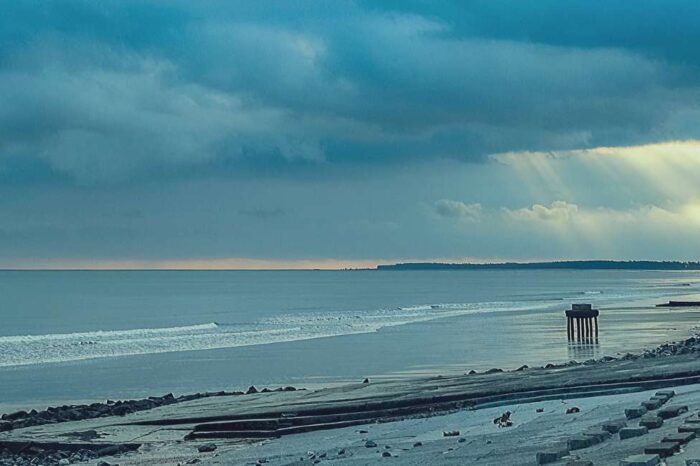
Digha is West Bengal’s most popular beach destination and the first point of call for anyone visiting Midnapore’s coastline. Located on the Bay of Bengal, it is approximately 180 km from Kolkata and is accessible by road, rail, and even overnight bus services that run daily from Howrah. The beach at Digha stretches wide and shallow, with gentle waves that make it ideal for families and first-time beach visitors. The old town of Old Digha is quieter and more intimate than New Digha, which is lined with hotels, food stalls, and market lanes. Don’t miss the sunrise walk along the shore – the sky turns a spectacular orange-pink. The Marine Aquarium and Research Centre at Digha is also worth a visit, showcasing the marine biodiversity of the Bay of Bengal.
Mandarmani
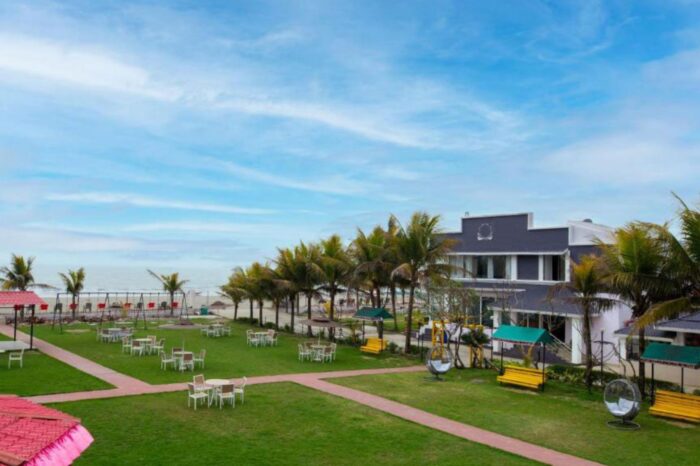
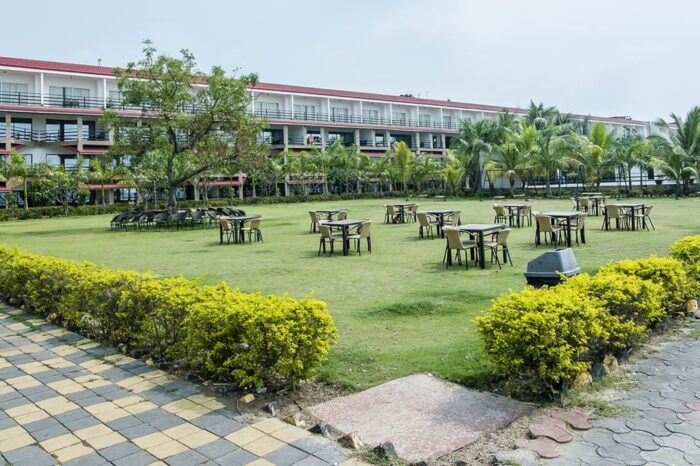
If Digha is the busy elder sibling, Mandarmani is the serene younger one who still has secrets. Located just 14 km from Digha, Mandarmani is famed for its seemingly endless motorable beach – over 13 km of driveable shoreline where red crabs scuttle across the sand in their thousands during the evening. The atmosphere here is unhurried. Resorts are set back from the shore, fishing boats dot the horizon, and the only sound is the surf and the wind. It is the ideal place for those who want the beach experience without the crowd. Seafood lovers will find fresh catches served directly from the fishing boats – tiger prawns, pomfret, and mud crabs cooked in the mustard-heavy Bengali style that is simply unmatched.
Tajpur
Tajpur is Midnapore’s best-kept secret – a virgin beach that most Indian travellers have yet to discover. Largely undeveloped, it offers nothing but the raw beauty of the sea and the simplicity of a fishing village unchanged for decades. There are a handful of basic eco-resorts and home stays here run by locals. The beach is clean, uncrowded, and backed by casuarina groves that provide shade and privacy. Tajpur is ideal for birdwatchers, solo travellers, and couples seeking solitude. The sunsets here are extraordinary – unobstructed by buildings or signage, just the sea meeting the sky in a burning gradient.
Shankarpur
Just 8 km from Digha, Shankarpur is a working fishing village with a beach of its own. Every morning, the beach becomes a spectacle as hundreds of colourful fishing boats push out to sea or return with the night’s catch. The fish auction that follows on the shore is a sensory riot – a tradition unchanged for generations. The beach is quiet during the day, making it a peaceful contrast to the activity of Digha. Shankarpur is particularly popular with Bengali families who prefer a homely, authentic coastal experience over a resort holiday. Several small guesthouses offer simple rooms and excellent fresh fish meals cooked in traditional Bengali style.
Jhargram
Jhargram is Midnapore’s green lung – a forested town that was once part of the Jhargram Raj, a royal estate that ruled these sal forests for centuries. The Jhargram Palace is the centrepiece: a grand European-style mansion set in manicured gardens, now partially converted into a heritage hotel run by the West Bengal Tourism Development Corporation. Walking through its corridors feels like stepping through a time portal. The surrounding forests are ideal for nature walks and birdwatching, with over 150 species of birds recorded in the area. The Chhau dancers of Jhargram are its most celebrated cultural ambassadors – performances are organised during festivals and can sometimes be arranged on request. Jhargram is also the gateway to the Belpahari and Amlasole tribal hamlets, where indigenous life continues at its own quiet rhythm.
Belpahari
Belpahari is Midnapore’s hill-and-forest retreat. Nestled in the foothills of Purulia, this area is defined by densely forested red-earthed hills, rocky streams, and seasonal waterfalls that cascade dramatically during and after the monsoon. The Sita Kund waterfall and the tribal hamlets of Amlasole – reachable only on foot or by jeep through narrow forest tracks – are the highlights. This is the Midnapore that most tourists never see. The Lodha tribal community here still practices traditional forest-based livelihoods, and their handmade bamboo crafts are sold at weekly haats (markets). Belpahari is ideal for trekkers, photographers, and anyone who wants to connect with Bengal’s raw, unhurried wilderness.
Chandrakona
Chandrakona is rightly called the “City of Temples” – a quiet town in Paschim Medinipur with over 150 terracotta temples packed into its narrow lanes, most built between the 17th and 19th centuries by local landlords and merchants. The temples dedicated to Shiva, Radha-Krishna, and various local deities are adorned with extraordinarily detailed bas-relief panels depicting scenes from the Ramayana, Mahabharata, and Krishna Leela. Unlike the more famous terracotta temple towns of Bishnupur, Chandrakona remains largely undiscovered by mass tourism – which means you can walk through temple after temple in complete peace. It is a paradise for photographers, art historians, and anyone who loves beautiful, quiet things.
Mahishadal
Mahishadal, in Purba Medinipur, is the town of the Mahishadal Raj – a zamindari estate whose palace complex overlooking a serene lake is one of the most picturesque heritage structures in southern Bengal. The estate is also famous for its Radha-Shyamsundar Temple, which hosts one of the most elaborate Janmashtami celebrations in the district. The palace, though partially in decline, has a romantic grandeur that photographers and history lovers will find irresistible. Mahishadal is also close to Haldia, the industrial port town, making it a convenient stopover for those travelling through the eastern belt of Midnapore.
Kharagpur
Kharagpur is Midnapore’s modern anchor – a city built around one of the most iconic railway junctions in India (Kharagpur Junction has the longest railway platform in the world at 1,072 metres). It is also home to IIT Kharagpur, India’s first and most prestigious Institute of Technology, located on the historic grounds of the former Hijli Detention Camp where Indian freedom fighters were imprisoned and shot by British forces. The IIT campus itself is worth a visit – its museum, the BC Roy Technology Museum, and the Nehru Museum of Science & Technology document both the freedom struggle and the development of India’s scientific institutions. Kharagpur is a well-serviced base for exploring all of Midnapore and has good connectivity to Kolkata, Bhubaneswar, and the beaches.
Experiences
- The 10 Best Japan Festivals for Indian Travellers
 August 24, 2026
 - The Ultimate Japan Travel Guide: 17 Must-Visit Destinations
 August 17, 2026
 - Wine Tourism in India
 June 8, 2026
 - Anini Tour
 June 5, 2026
 - Tamia Hills Tour
 June 4, 2026
Call
98742 84569
98743 61951
Mon-Sat 11.00AM-07.30PMNewsletter
Uncategorized
- Tours in BlogApril 6, 2026
- Tours in Blog
- Required plugin "Meks Easy Photo Feed Widget" is required. Please install the plugin here. or read more detailed instruction about How to setup the plugin here
Connect to Us
Recent Tours
Rate & Review Us
Contact Info
- +91 98742 84569
- experience@ocean6.in
- 16, Suren Tagore Rd, Ekdalia, Ballygunge, Kolkata, West Bengal 700019
- Mon - Sat : 11.00 AM - 7.30 PM
Sunday : CLOSED
Newsletter
Quick Links
