The Ultimate Anini Travel Guide: Discovering Arunachal’s Last Frontier
1. Introduction: The Unspoiled Heart of Dibang Valley
Recognized as the “Best Offbeat Mountain Destination” by Outlook Traveller in 2024, Anini is a realm where rugged Himalayan geography meets an almost mythic isolation. As the administrative headquarters of the Dibang Valley—the least populated district in India—Anini is situated on the precipice of the international border with Tibet and China.
For the 0.001% of travelers who venture this deep into the Mishmi Hills, the reward is a landscape of crystalline blue rivers and high-altitude grasslands. This is a journey that moves from the humid plains of Assam, across the longest bridge in India, and over mist-shrouded passes into a frontier where nature remains raw and absolute. It is a destination that tests your will against the mountains and rewards your patience with the silence of the clouds.
2. Essential Travel Logistics: Reaching the Remote
Reaching Anini is an expedition that requires meticulous planning. The infrastructure is evolving, but the terrain remains unforgiving.
Primary Gateways:
- By Air: Fly into Dibrugarh Airport (Assam), roughly 200 km from Roing.
- By Rail: The nearest major railhead is Tinsukia Station (Assam).
The Route via Roing:
All journeys must pass through Roing, the gateway town.
From Dibrugarh, the route crosses the Dhola Sadiya Bridge (Dr. Bhupen Hazarika Setu). Spanning 9.2 km over the Brahmaputra, it is a technical marvel and the longest bridge in India.
The Roing-Anini Leg:
- Distance: Approximately 258 km (accounting for current road-cutting detours).
- Duration: 8–10 hours.
- The Pass: You will ascend the Mayodia Pass (2,655m). In winter, this pass is the region’s primary snow destination; in summer, it offers sweeping views of the Mishmi Hills.
Local Transport:
- Shared Sumos: Daily services depart Roing for Anini between 6:00 AM and 7:00 AM to beat scheduled road blockages. Cost is approximately ₹1,000 per person.
- Private Hire: For the 35-degree slopes and frequent mud, a 4×4 vehicle is highly recommended. While Innovas and Boleros are common, 2WD vehicles are high-risk during rain or shoulder seasons.
3. Permits and Regulations
Anini is located in a restricted border zone. Legal documentation is non-negotiable and strictly enforced at check-posts like Shantipur and Bruni.
- Inner Line Permit (ILP): Mandatory for all Indian citizens. Apply via arunachalilp.com.
- Protected Area Permit (PAP): Mandatory for international guests.
- Local Permissions: High-altitude treks (Seven Lakes or Pomo Grassland) require specific permits from the District Magistrate’s office in Anini.
Specialist Tip: Carry 10-15 photocopies of your ILP/PAP and government ID. Check-posts often require physical copies for every entry into restricted valleys.
4. Seasonal Recommendation: When to Go
The weather in the Dibang Valley dictates the safety and success of your journey.
- Peak Season (October to April): Best for clear Himalayan visibility and road stability.
- Blooming Season (April to June): Ideal for witnessing the forests in full bloom and moderate trekking temperatures.
- Winter Appeal (January to February): Go for deep snow at Mayodia Pass and Chigu Camp. Note that the pass can occasionally close due to heavy snowfall.
- Monsoon Warning (July to August): Travel is strongly discouraged. Heavy landslides and road-cutting activities cause unpredictable, multi-day blockages.
5. Major Attractions & Valleys: Where Nature Remains Raw
Dri Valley & Acheso
The Dri River is the valley’s lifeline—strikingly blue and pure. Acheso Village offers a quiet retreat, while Dree Afra Camp provides a “bird’s eye view” of the valley floor that rivals the alpine meadows of Uttarakhand.
Mathun Valley
A tranquil expanse of pine forests and riverbanks, this valley is the gateway to Mipi Village. It is the ultimate spot for stargazing and experiencing the profound silence of the northern frontier.
The Waterfall Circuit
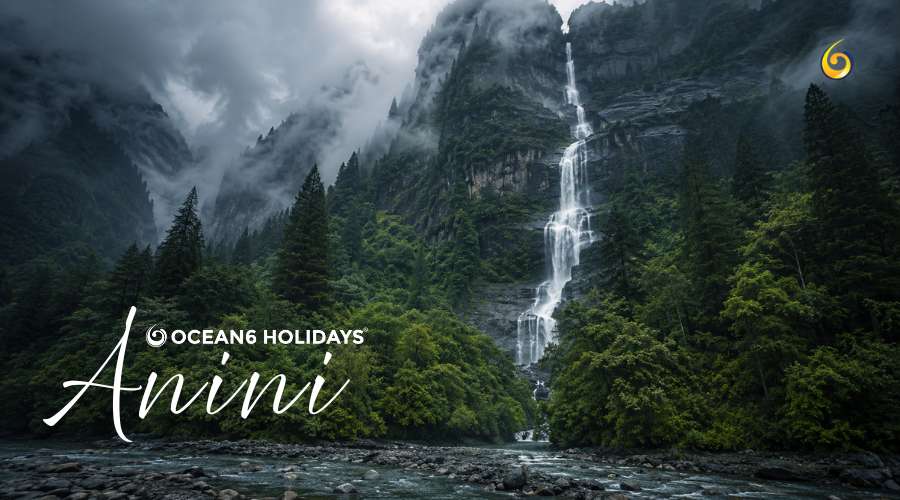
Anini is a “land of waterfalls,” many appearing as massive white vipers against green cliffs:
- Mathu (Mawu) Falls: A multi-tiered cascade near Chigu; recently featured in national media for its picturesque scale.
- Chigu Falls: Located adjacent to Chigu Camp.
- Ahi (Thepra) Falls: One of the most massive falls in the region, appearing to drop directly from the clouds.
- Mayu Ando Falls: Accessible via a scenic jungle trail and rustic wooden bridges.
Grassland Treks
- Emoli Grassland: A vast “green ocean” of rolling meadows offering panoramic views. It is a relatively short but steep ascent.
- Pomo Valley/Grassland: A hidden paradise reachable via a one-day trek from the Bruni check-post. It requires local permits and a guide.
6. The Seven Lakes Trek: The Crown Jewel of Anini
For the elite trekker, this is India’s most beautiful high-altitude experience.
- The Technical Challenge: The trek reaches elevations of 12,500+ feet. Crucially, Day 1 involves a grueling 3,000-foot elevation gain over 4 km of steep terrain.
- The Experience: You will traverse through the “Silver Fish Glacier” lakes—a canvas painted in flowers where the sky and hills meet in silent hours.
- The Logistics: Local Idu Mishmi guides and porters are mandatory. You must engage in a “time race” against the clouds; the lakes are often shrouded in mist by noon, so early morning starts are essential for visibility.
- Preparation: Carry high-altitude medications and prepare for rapid weather shifts.
7. Cultural Immersion: The Idu Mishmi Tribe
The Idu Mishmi are the indigenous guardians of this valley, practicing animistic beliefs with a deep reverence for the surrounding ecology.
- Festivals: Time your visit for Reh (February) or Tamladu to see traditional dances and hear the shamanistic storytelling that has survived for centuries.
- Traditional Attire: Observe the unique hand-woven waistcoats and distinctive hats (Apu-hulo).
- Etiquette: Respect the “Leave No Trace” principle. Always ask for permission before photographing individuals. Never disrupt ritual sites.
8. Accommodation & Food Directory
Accommodations emphasize local hospitality over luxury. Be prepared for the “culture meets survival” reality of remote stays.
| Property | Type | Highlights | Best For |
|---|---|---|---|
| Anini Hut | Budget / Eco-Lodge | Community-run, basic rooms, central Dhuni (fireplace), organic local meals | Backpackers, cultural enthusiasts |
| Ziro House (Circuit House) | Government Guest House | Limited rooms, strategic location, basic amenities | Budget travelers, early bookers |
| Private Homestays | Community Homestay | Authentic Idu Mishmi hospitality, home-cooked meals, cultural interaction | Immersive cultural experience |
| Trekker’s Camps | Camping | At Chigu Camp, Dree Afra, Seven Lakes base. Basic tents, no running water | Trekkers, adventure seekers |
Dining Notes: Meals are organic and prepared fresh. Expect boiled chicken with local herbs, bamboo shoot curry, and Apong (rice beer).
Specialist Insight: At Anini Hut and remote camps, water is often heated in large kettles over a central fire (Dhuni) because the power crisis frequently renders geysers non-functional. Breakfast is basic—usually potatoes and bread—and service can take 40–60 minutes.
9. Survival Guide: Connectivity, Cash, and Road Realities
- Connectivity: Airtel has the best presence, but 4G is unstable. Do not rely on high-speed data for work or navigation. Expect zero network in the valleys and on treks.
- Electricity: Outages are a daily reality. Carry high-capacity power banks. Some resorts use generators, but they are not 24/7.
- Road Realities: The highway features 35-degree slopes. Ongoing double-lane construction means 1–2 hour blockages for road-cutting are common.
- Vehicle Choice: Only hire or drive high-clearance vehicles. 4×4 capability is highly recommended; even 4x4s struggle on these slopes when the road is muddy.
- Banking: ATMs are scarce and often offline. UPI frequently fails. Carry sufficient cash for your entire stay.
- Fuel Warning: There is no petrol pump between Roing and Anini (258 km). You MUST fill your tank in Roing and carry extra fuel in containers.
10. Suggested 6-Day “Offbeat Explorer” Itinerary
- Day 1: Dibrugarh to Roing via the Dhola Sadiya Bridge and Sally Lake.
- Day 2: Roing to Anini. Stop at Mayodia Pass for the legendary “Paharo Wali Maggi” and mountain views.
- Day 3: Dri Valley & Acheso. Picnic at Dree Afra and a hike to the base of Mawu Falls.
- Day 4: Mathun Valley & Mipi Village. Explore the Emoli Grassland meadows.
- Day 5: Chigu Camp & Bruni. Visit the final point before ITBP posts; view the Ahi (Thepra) Falls.
- Day 6: Early 6:00 AM departure for the return journey to Dibrugarh/Tinsukia.
11. Conclusion: The Transformative Journey
Anini is not a destination for the casual tourist; it is a pilgrimage for those who seek the “Last Frontier.” It is a land where your will is tested and your perspective is shifted by the raw power of the Purvanchal Himalayas. As you depart this sacred valley of the Idu Mishmi, remember the local mantra: “Leave nothing but footprints, take nothing but memories.”