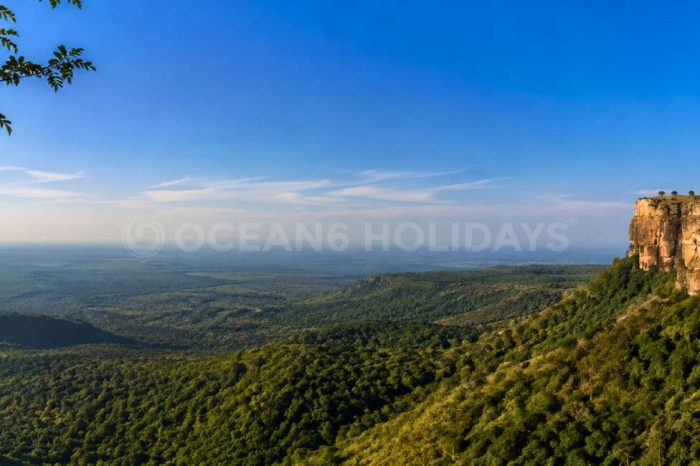

Complete Travel Guide to Madhya Pradesh’s Hidden Satpura Paradise
Why Visit Tamia?
A Tamia Hills Tour is one of the most rewarding offbeat travel experiences in Central India. Located in the southern highlands of Madhya Pradesh, Tamia sits along the southwestern edge of the Satpura Mountain Range at an elevation of approximately 1,148 meters (3,765 feet). The region is known for dramatic cliffs, deep valleys, winding ghat roads, dense forests, tribal heritage, and untouched landscapes.
Unlike many popular hill destinations, Tamia has largely avoided large-scale commercialization. This has helped preserve its natural beauty and cultural authenticity, making it an ideal destination for travelers seeking nature, tribal culture, trekking, and sustainable tourism.
The area’s most famous attraction is the spectacular Patalkot Valley, a massive horseshoe-shaped basin hidden within the Satpura landscape.
What Makes Tamia Special?
Tamia’s landscape is shaped by ancient geological processes dating back to the Precambrian period. The region contains ancient granite formations, Gondwana sandstones, deep escarpments, and dramatic valley systems.
The terrain features:
- Steep sandstone cliffs
- Deep gorges
- Dense deciduous forests
- Seasonal streams
- High plateaus
- Valley ecosystems with unique microclimates
One of the most fascinating natural features is the way sunlight struggles to reach the deepest sections of Patalkot Valley during winter. This has inspired local legends linking the valley to the mythical underworld or “Patal”.
What to Experience During a Tamia Hills Tour
Patalkot Valley
Patalkot Valley is the crown jewel of Tamia tourism.
Viewed from above, the valley resembles a giant horseshoe carved into the Satpura Plateau. The basin covers approximately 79 square kilometers and drops nearly 400 meters below the surrounding plateau.
Highlights include:
- Dense moist deciduous forests
- Deep gorges
- Doodhi River
- Traditional tribal settlements
- Unique microclimate
- Rich medicinal plant diversity
The valley houses several villages inhabited mainly by the Bharia and Gond communities.
Chhota Mahadev
Located about 2 kilometers below the Tamia PWD Rest House, Chhota Mahadev combines natural beauty with spiritual significance.
Visitors can explore:
- A natural cave shrine
- A Shiva Lingam
- A perennial spring
- A 35-foot waterfall
- A dramatic sandstone gorge
The waterfall remains active throughout the year due to groundwater storage in the surrounding formations.
Anhoni Hot Springs
Near Mahuljhir village lies one of Tamia’s most unusual attractions—Anhoni Hot Springs.
The site features:
- A hot-water pool
- A cold-water pool
- Sulfur-rich mineral water
- Geothermal activity
The springs are associated with local cultural traditions and attract visitors throughout the year.
Nature Trails
Toshadhana Nature Trail
A 6-kilometer trail offering scenic views of the Satpura landscape.
Chourapahad Trail
A 3-kilometer hike leading to elevated viewpoints overlooking distant Pachmarhi hills.
Tamia Dam & Bakhari Hill Trek
A 5-kilometer route combining reservoir views, forest walks, and village exploration.
Pratapgarh Pahad Trail
A challenging trek leading to a hill that rises approximately 1,000 feet above the valley floor. The trail passes through forests, waterfalls, and historical remnants.
Mountain Top Sunrise & Sunset Walks
Short guided hikes allow visitors to experience panoramic views while learning about local flora, fauna, and geology.
Waterfalls Around Tamia
Lilahi Waterfall
Located on the Kanhan River, Lilahi Waterfall becomes especially impressive during the monsoon and remains attractive until January.
Kukdi Khapa Waterfall
A two-stage waterfall dropping roughly 60 feet through the forested Sillevani hills.
Tribal Heritage of Patalkot
The Bharia Tribe
The Bharia community is recognized as a Particularly Vulnerable Tribal Group (PVTG) in Madhya Pradesh. The tribe has lived in the Patalkot region for more than 500 years.
Important cultural features include:
- Traditional mud houses
- Sacred groves known as Devghar
- Elaborate wedding rituals
- Tattoo traditions among women
- Deep ethnobotanical knowledge
- Community dances and music
The Bharia people maintain strong ecological relationships with the forests surrounding Patalkot.
The Gond Community
The Gond community forms another important cultural group within the region and has historically influenced the area’s political and cultural development.
How to Meet Local Tribes Respectfully
Responsible tourism is essential in Patalkot.
Do’s
- Hire local guides when possible.
- Support community-based tourism initiatives.
- Purchase local handicrafts directly from artisans.
- Respect local customs and traditions.
Don’ts
- Do not enter homes without permission.
- Avoid disturbing religious sites.
- Do not remove plants or cultural artifacts.
Photography Etiquette
Always request permission before photographing people, ceremonies, or private spaces.
Supporting Local Livelihoods
Community-based tourism projects, local guiding services, and tribal food initiatives provide direct benefits to local families.
Where to Stay in Tamia
| Property | Type | Highlights | Best For |
|---|---|---|---|
| Motel Tamia | Mid-range | Government tourism property, cottages, highway access | Families |
| Serendipity Lakes & Resorts | Premium Resort | Lakeside cottages, nature walks, hilltop experiences | Couples & nature lovers |
| LETS Camp Tamia | Eco Camp | Safari tents, stargazing, trekking | Adventure travelers |
| Tamia Forest Rest House | Heritage Stay | Historic bungalow, cliff-edge views | Heritage enthusiasts |
All information above is based on the provided source document.
What to Eat During a Tamia Hills Tour
Patalkot ki Rasoi
One of the most authentic food experiences in Tamia is Patalkot ki Rasoi, a community-based culinary initiative that showcases tribal food traditions.
Pej
The most important traditional food is Pej, a nutritious porridge prepared using maize, jowar, millet, or rice.
Forest Produce
Traditional meals often include:
- Wild mushrooms
- Seasonal greens
- Forest tubers
- Local pulses
Common pulses mentioned in the source include Arhar, Tuar, and Mung.
Vegetarian and non-vegetarian classifications are not confirmed in provided sources.
How to Reach Tamia
| Gateway | Distance to Tamia |
|---|---|
| Nagpur | 185–210 km |
| Bhopal | 220–260 km |
| Jabalpur | 220–230 km |
| Chhindwara | 60–70 km |
| Parasia | 45 km |
| Junnardeo | 29 km |
By Air
Nagpur Airport is the most convenient air gateway. Bhopal and Jabalpur also provide access options.
By Rail
Nearest rail access includes:
- Parasia
- Chhindwara Junction
- Pipariya
- Itarsi
- Junnardeo
By Road
Tamia is connected through State Highway 19 linking Chhindwara and Pachmarhi.
Suggested Itineraries
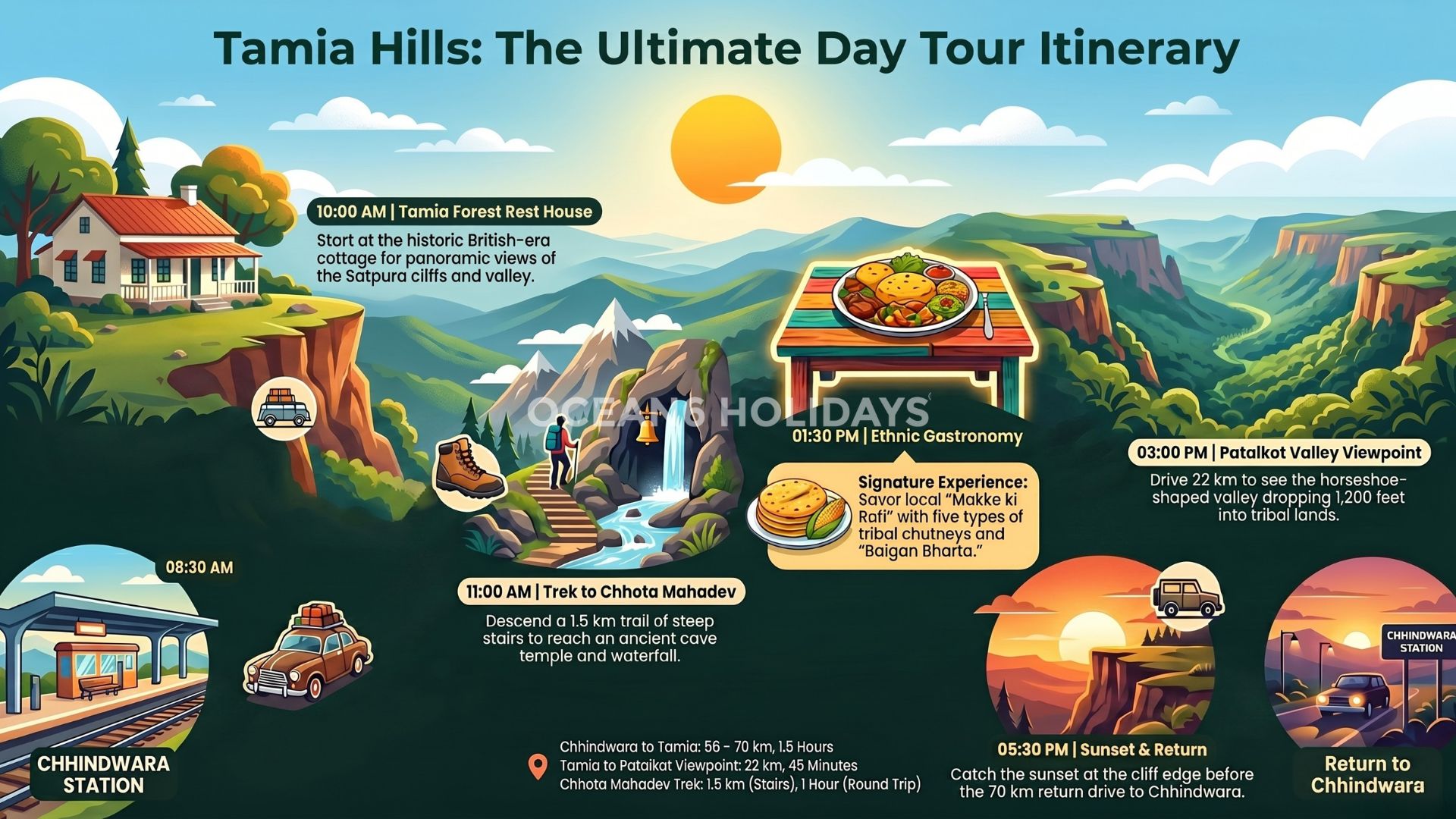
Day Tour
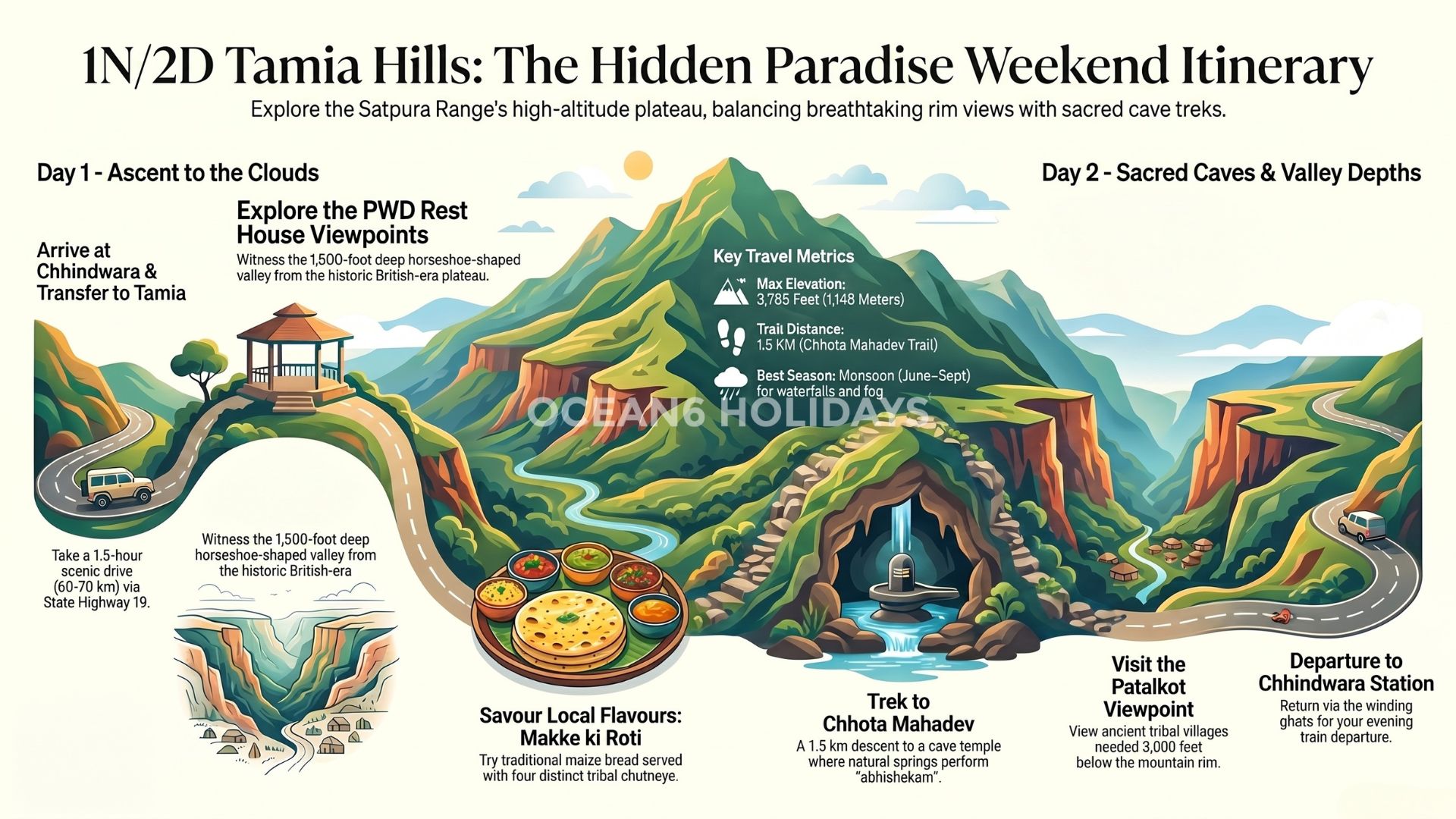
1N/2D Tour
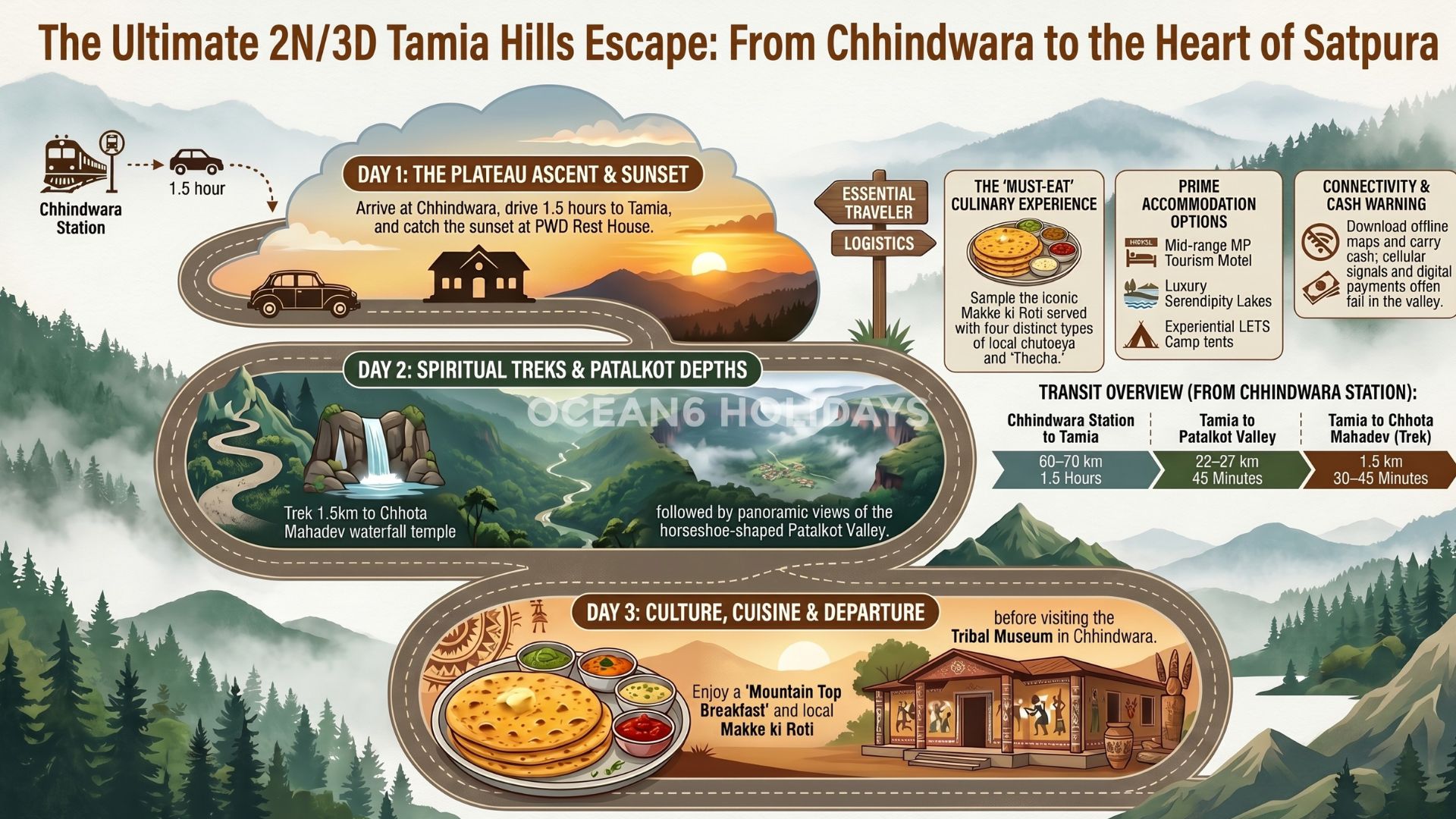
2N/3D Tour
Tamia Hills FAQs
Is Tamia worth visiting?
Yes. Tamia offers dramatic landscapes, tribal heritage, forests, and sustainable ecotourism experiences.
What is famous in Tamia?
Patalkot Valley is the region’s most famous attraction.
How many days are enough?
Two to three days allow visitors to explore major attractions comfortably.
What is Patalkot Valley?
A horseshoe-shaped valley known for its unique geography, forests, and tribal communities.
Which tribes live in Patalkot?
The Bharia and Gond communities are the primary tribal groups.
Is Tamia good for trekking?
Yes. Several guided nature trails and trekking routes operate in the region.
What is Pej?
A traditional tribal porridge made from maize, millet, jowar, or rice.
Is Tamia crowded?
The source indicates that Tamia remains less commercialized than nearby destinations.
Tamia Hills Highlights
- Tamia sits approximately 1,148 meters above sea level.
- Patalkot Valley forms a horseshoe-shaped basin.
- Patalkot covers about 79 square kilometers.
- The Doodhi River drains the valley.
- Bharia communities have lived in the valley for over 500 years.
- Around 220 medicinal plant species are used by local tribal healers.
- Chhota Mahadev features a cave shrine and perennial waterfall.
- Anhoni Hot Springs contain sulfur-rich geothermal water.
- Patalkot ecotourism began in 2009.
- More than 3,000 tribal youth have been trained in ecotourism activities.
Tamia vs Pachmarhi
| Feature | Tamia | Pachmarhi |
|---|---|---|
| Tourism Character | Less commercialized | More developed tourism destination |
| Atmosphere | Quiet and offbeat | More mainstream |
| Ecotourism Focus | Strong | Not specifically compared in source |
The source notes that Tamia has avoided the level of commercialization seen in neighboring Pachmarhi.
Responsible Tourism Guidelines
- Stay on designated trails.
- Respect tribal customs.
- Avoid damaging rare plants.
- Carry offline maps.
- Keep cash available.
- Travel through ghat sections during daylight.
- Use local guides whenever possible.
These recommendations are consistent with the ecotourism and safety guidance provided in the source document.
Conclusion
A Tamia Hills Tour offers a rare combination of dramatic geology, tribal heritage, biodiversity, trekking opportunities, and authentic cultural experiences. From the breathtaking depths of Patalkot Valley to the sacred atmosphere of Chhota Mahadev and the living traditions of the Bharia community, Tamia represents one of Madhya Pradesh’s most fascinating yet underexplored destinations. For travelers seeking meaningful, sustainable, and nature-focused journeys, Tamia remains one of the finest hidden treasures.